
Designed & maintained by Carol Gingell

© C.Gingell 2006-2026 All photographs, personal stories and written articles on this site are copyright and should not be reproduced anywhere else without the permission of the copyright owner and Broadland Memories.
© Broadland Memories 2006-2026


 1900-1949 History
1900-1949 Memories
1900-1949 History
1900-1949 Memories
 << Pages 1-10
More images from the 1931 photograph album
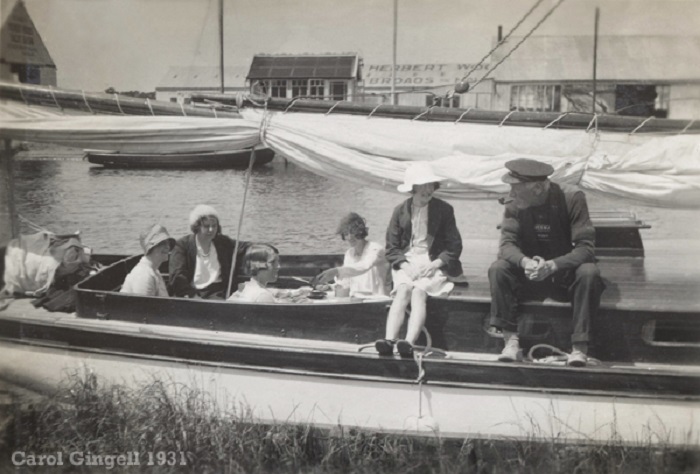
A wonderful photograph of the holiday party with their skipper, taken at Potter Heigham with Herbert Woods Broads Haven yard in the background. The skipper is wearing his Collins uniform - as mentioned elsewhere within the 1900-1950 Gallery, this included a guernsey jumper with the company’s name, and the name of the boat under their charge, emblazoned across the front.
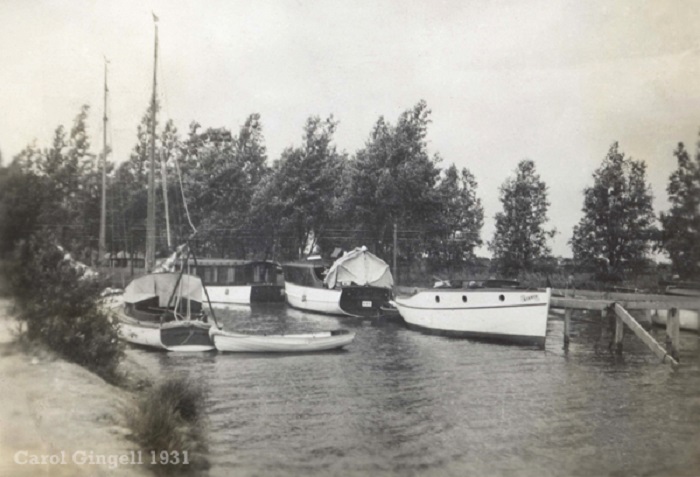
The Pleasure Boat Inn moorings at Hickling.


The Pleasure Boat Inn at Hickling.
The Upper Thurne and Horsey Mill.
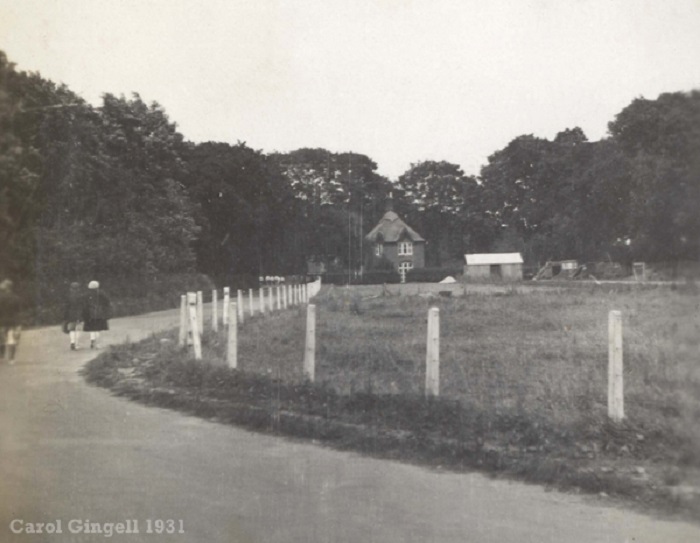
This thatched cottage can still be found on the B1159, just south of Horsey village.

We move on to a selection of photographs taken in 1934. The family group hired B119 “Maid Of The Foam” from Jack Powles & Co. Ltd. Of Wroxham whose yard can be seen above. The family pose onboard at the start of their holiday - the building seen behind is the Central Heated Airing Stores.
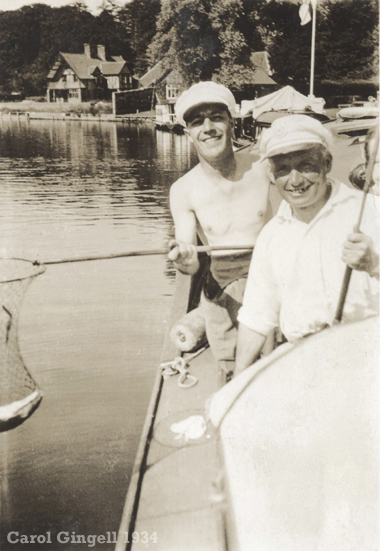
Fishing at the Anchor Hotel moorings in Coltishall. Blakes 1933 brochure described Coltishall as “a quaint old village amidst charming scenery”. The landlord of The Anchor Hotel at this time was George Raymond Neal and it was a popular mooring spot for many years. A late 1930s advert for the hotel offered luncheons, dinners, teas and the provision of hot baths, and its amenities included an 18 hole putting green and a bowling green. It told us that our “Broadland Holiday is not complete without seeing the wonderful scenery above Wroxham to Coltishall”. The Anchor Hotel closed c1985 and is now a private residence.
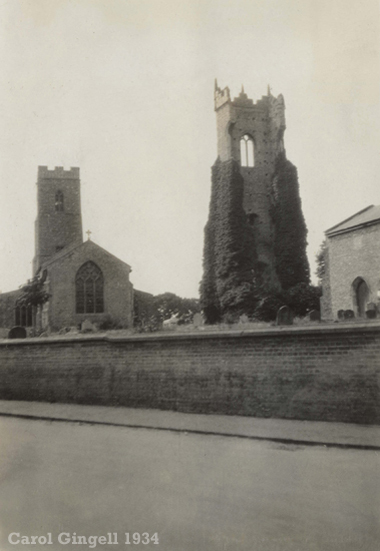
The churches of St. Mary and St. Lawrence at South Walsham. These two churches were built in the same churchyard in the early 14th century and were on the border between two medieval manors who each decided to build their own church. St. Lawrence, in the foreground, was gutted by fire in 1827 and was largely abandoned and left to go to ruin, only the chancel was repaired and was later used as a schoolhouse. The tower was still standing up until 1971 when it suffered two disasters in short succession - firstly it was struck by lightening and then the sonic boom from a low flying aircraft caused it to collapse. The remains of the base of the tower can still be seen in the churchyard and the chancel building has now been fully restored and is used as a church hall.

The riverside at Horning in 1934.

B119 “Maid Of The Foam” moored in what is now the day boat dyke at Ranworth. The Silver Foam class were described as being “The most highly developed 3 cabin cruiser to date” by Blakes boating brochures in the early 1930s. They were 34ft in length with a 9ft 4in beam, slept 6 people and were fitted with a 16 hp Thornycroft engine. Hire terms were between £12 and £17 per week.

Another photograph of Maid Of The Foam, at an unknown location.

Cruising on the River Thurne - Thurne Dyke Mill can be seen in the background.
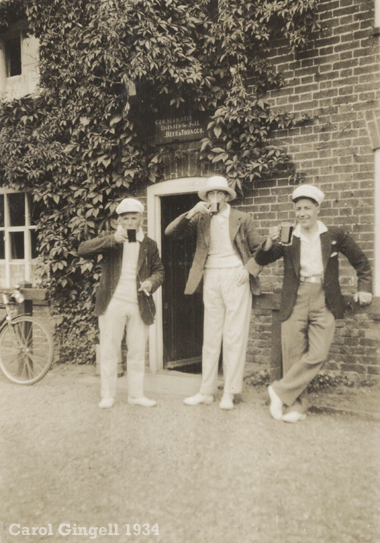

The crew enjoy a beer outside the Eagle Tavern in Neatishead. The licensee board above the door tells us that George Slaughter was the landlord at this time.
Cruising on the River Ant in 1934 - How Hill, the home of the Boardman family, can be seen in the background.
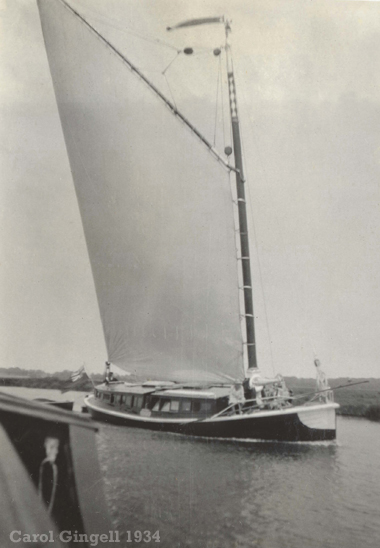
The pleasure wherry Hathor, possibly with members of the Colman or Boardman family onboard. Hathor was built by Daniel Hall of Reedham for Ethel and Helen Colman and was launched in July 1905 - she remained in the family until 1953.
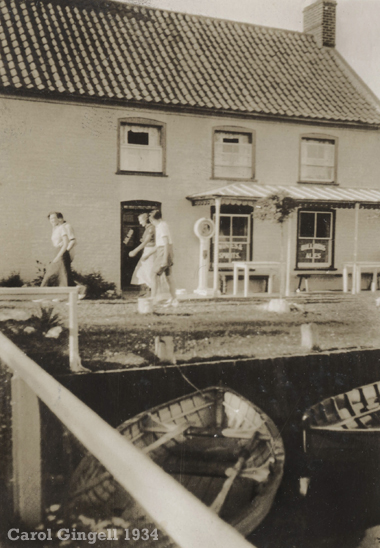
The Pleasure Boat Inn at Hickling. Frederick Hardwicke became the licensee in 1934 and, in the foreground, you can see some of the rowing boats which he offered for hire.
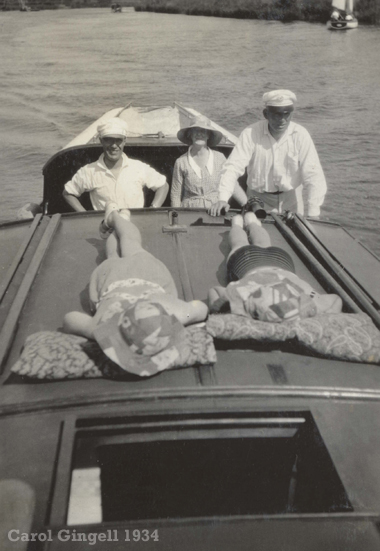
Two of the crew sunbathe as the family cruises along.
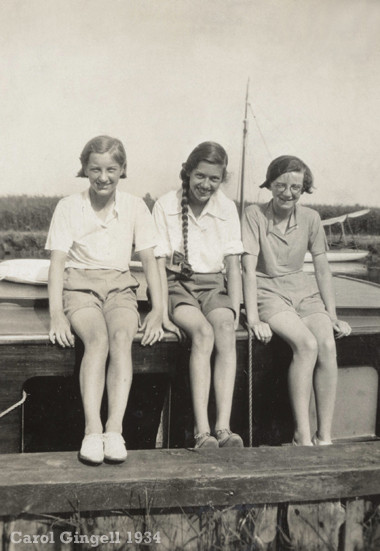
The three younger family members pose for the camera.
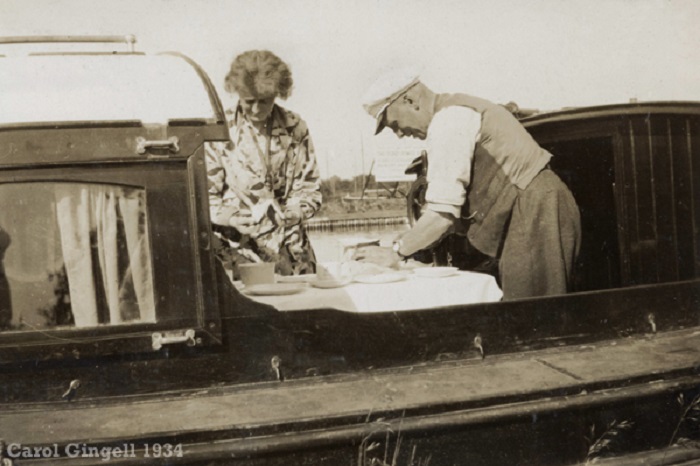
Preparing afternoon tea onboard Maid Of The Foam. The location is unknown, but the sign in the background appears to read “The Ferry Power .....?” which must limit the options.
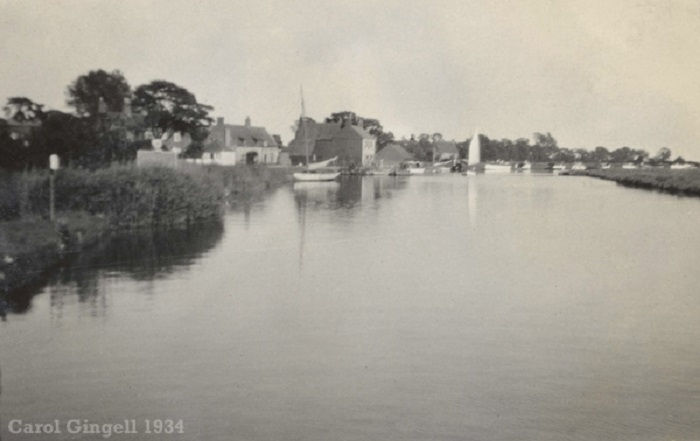
Approaching the Ferry Inn at Stokesby on the River Bure.

Leaving Great Yarmouth behind them, the family head out on to Breydon Water.
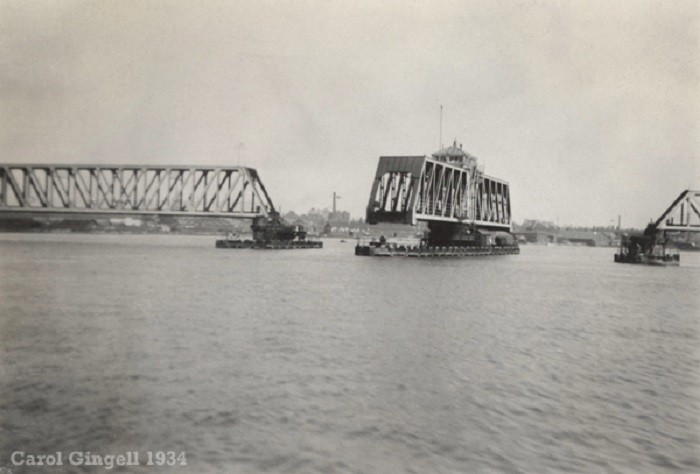
The Breydon Rail Bridge which crossed at roughly the same point as the modern road bridge. The rail viaduct was built by the Midland and Great Northern Railway Company, opening in 1903, and connected Great Yarmouth’s Beach Station with the Great Eastern Line’s South Town Station at Gorleston. The bridge was closed in 1953 and demolished in the early 1960s. You can read more about the history of the Breydon Viaduct in the “Bridges Of The River Yare” article which can be found in the Further Historical Reading section of the archive.

Another photograph taken whilst crossing Breydon in 1934. This is the coaster “Apricity” which was owned by F.T. Everard’s shipping company who were based in Greenhithe in Kent.

Maid Of The Foam moored at St. Olaves - the photograph was taken from the road bridge.
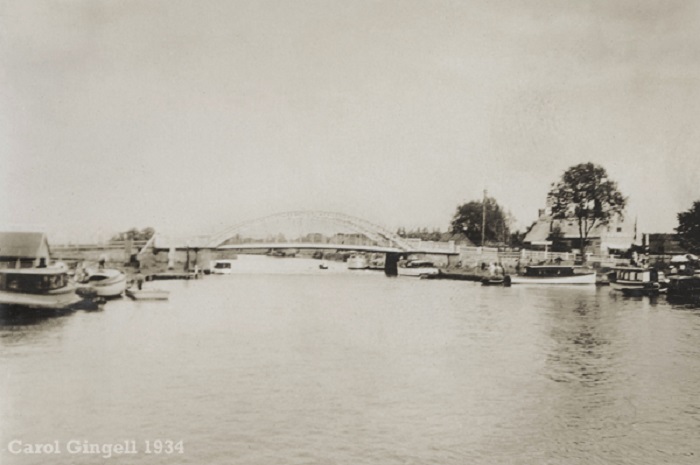
Approaching St. Olaves Bridge on the River Waveney. The bowstring girder bridge was designed by George Edwards of Carlton Coleville and was built in 1847. It replaced an earlier, three arch stone bridge which had been built c1500 - when the original structure was demolished to make way for the current bridge, stone blocks found in the supporting piers were found to be carved with signs of the zodiac which were believed to have come from St. Olaves Priory.

Another view of St. Olaves Bridge from 1934.

Swabbing the decks whilst moored at St. Olaves.

The crew pose for the camera with St. Olaves Bridge in the background.
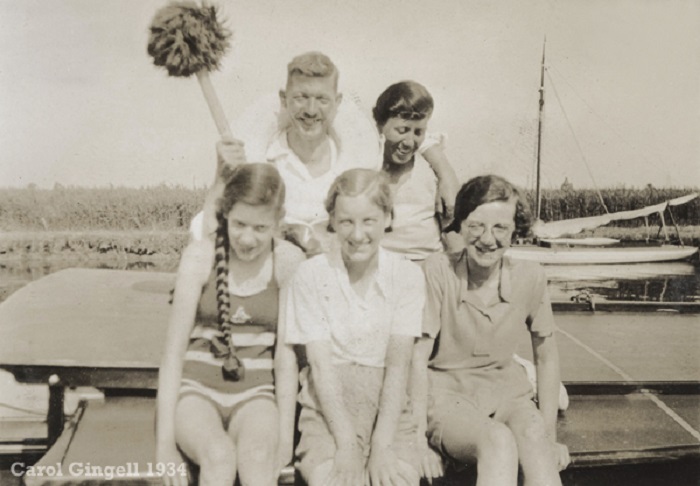
Another crew photograph taken at St. Olaves.
Next
Prev
Top
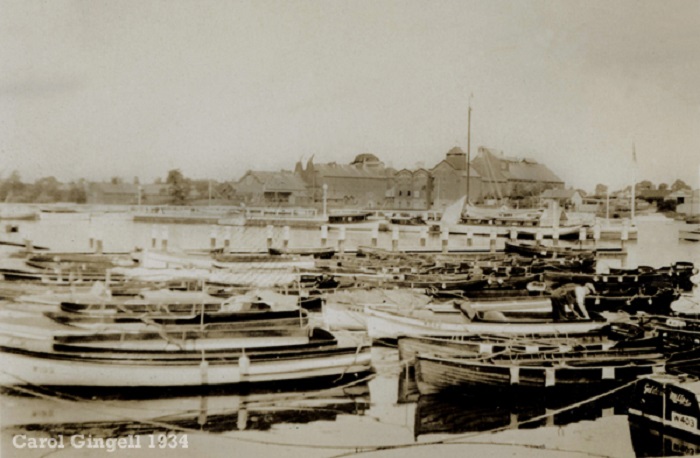
The final photograph from the 1934 album takes us to Oulton Broad. A variety of launches and rowing boats are seen moored here, the maltings buildings can be seen in the background. An unknown wherry yacht can also be seen moored in the background.
 Pages 21-30 >>


