
Designed & maintained by Carol Gingell

© C.Gingell 2006-2026 All photographs, personal stories and written articles on this site are copyright and should not be reproduced anywhere else without the permission of the copyright owner and Broadland Memories.
© Broadland Memories 2006-2026


More from the 1931 holiday onboard the yacht Iverna
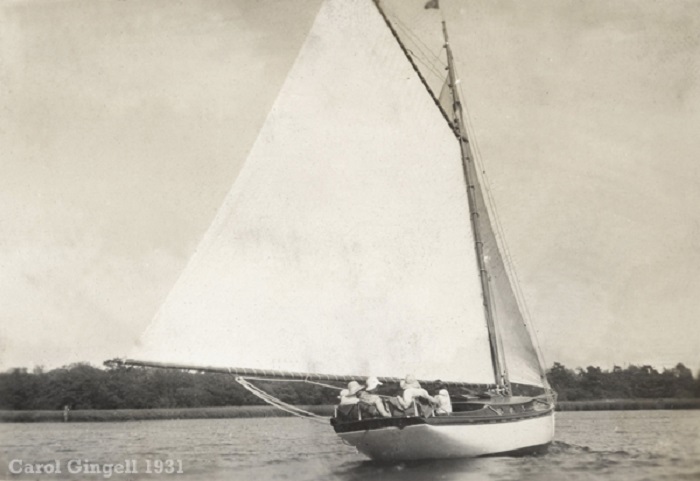
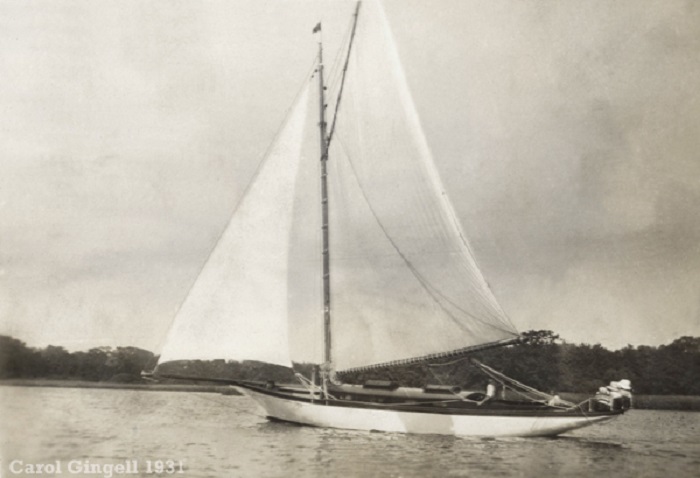
Another in the sequence of photographs taken on Wroxham Broad.

A sailing dinghy was included in the hire price and is presumably where one of the holiday party took these photographs from.
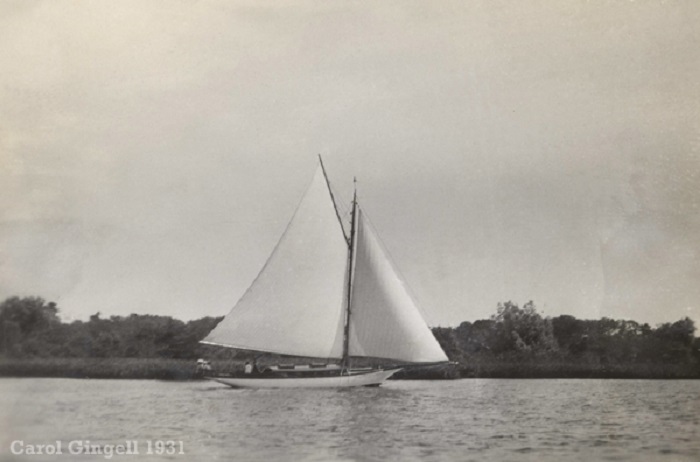
The final photograph of Iverna on Wroxham Broad.
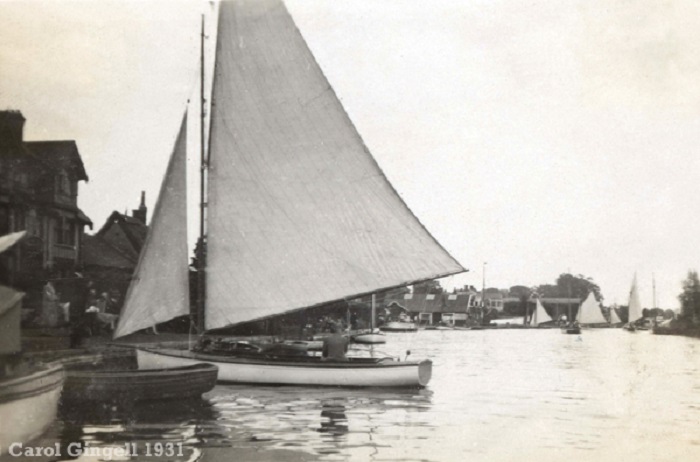
The riverfront at Horning, taken from Swan Corner in 1931.
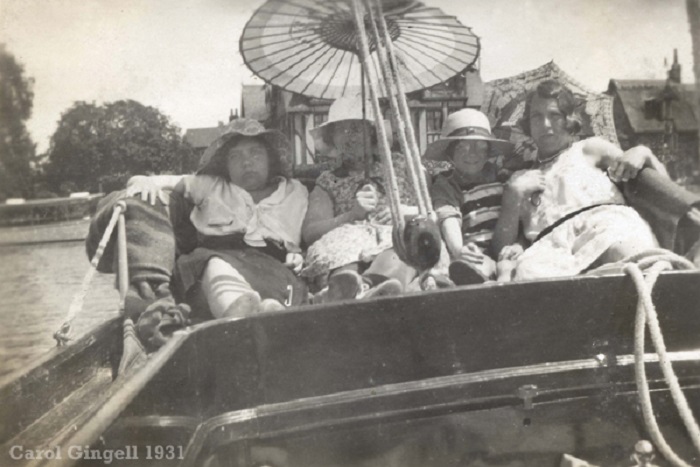
This photograph, taken at Horning, is wonderfully evocative of the 1930s with the clothing and parasols. The Swan Hotel can be seen in the background.

A busy river scene - unknown location, but probably on the River Bure.

The motor cruiser “Sonata” on the River Bure in 1931. I haven’t been able to establish which Wroxham boatyard she came from, but there were three sister ships in the class - “Senorita”, “Sirocco” and “Summertime” which were built between 1927-28. The class were 32ft in length with a 10ft beam, slept 6, were fitted with a 10 hp Brooke Empire engine and cost between £12 and £17 per week. The brochure also noted that it had wheel steering with a tiller option!
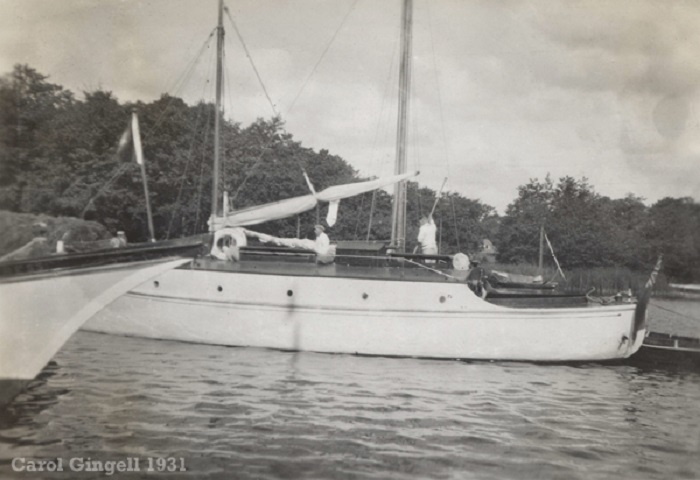
An unknown private yacht pictured in 1931. In the foreground you can just see the bow “Enchantress” which, at 60ft in length, was one of the largest motor cruisers on the Broads and was available to hire from Leo Robinson’s yard at Oulton Broad.
Hoisting the sail on an unknown sailing cruiser.

The Maltsters Inn at Ranworth pictured in 1931. The pub has been heavily altered and extended over the years and the scene above is almost unrecognisable today. The Starling family were licensees at the pub from the 1880s up until the 1950s, the landlord in 1931 was Thomas James Starling.

This was another puzzle thrown up from this album of photographs. At first I thought it might have been one of the Pulham airships, but discovered that the UK suspended their airship flights after the R101 crashed in France in 1930. On researching a little further, I now believe that this is the German Graf Zeppelin LZ-127 which was one of the most widely travelled airships of all time. It was launched on the 18th September 1928 and, at 776 feet in length was the largest airship up to that time. During it’s lifetime it made a total of 590 flights including many transatlantic crossings, a round the world flight in 1929 and a research trip to the Arctic in 1931. Although it had a perfect safety record, the Graf Zeppelin was retired in 1937 after the Hindenberg disaster. In 1931 it also visited London on a goodwill mission, and this photograph taken on the Broads may well have captured the Zeppelin during that flight.
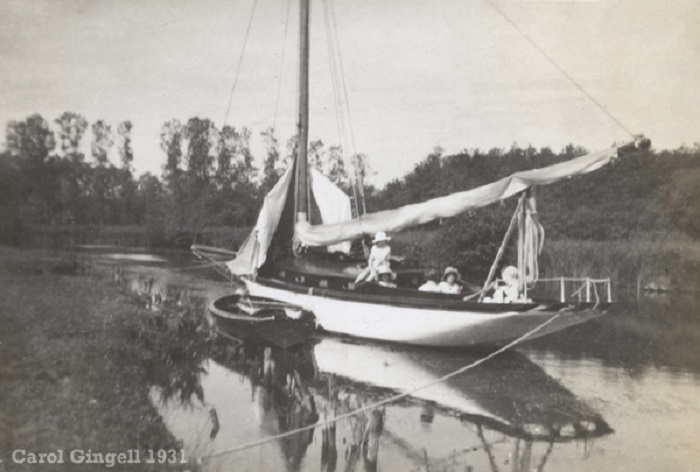
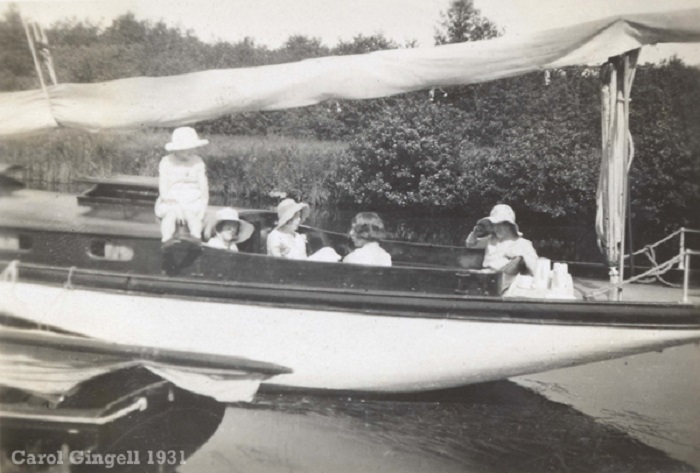
Another photograph of the party onboard Iverna taken at the same location as above.

Probably a staged pose but, none the less, a charming portrait of some of the group.

Two of the ladies in Iverna’s tender.
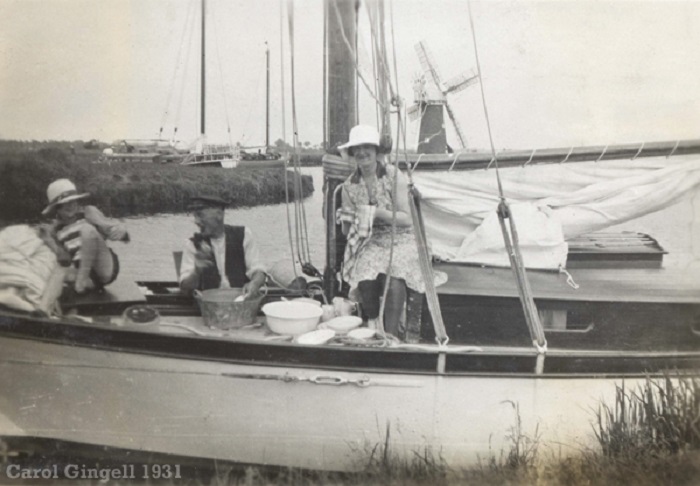
Washing up onboard Iverna - her skipper can be seen in the middle. In the background is Beaumont’s Mill on the River Ant, just below Ludham Bridge. You can also see two wherries moored to the left of the mill, the one closest is probably “Bramble” which was part of Leo Robinson’s fleet at Oulton Broad, but the other is unidentified at this time.
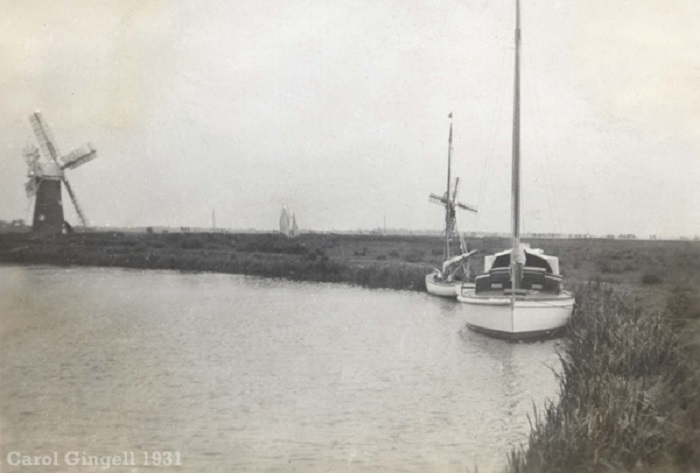
Another view of Beaumont’s Mill in 1931.

The wherry yacht “Goldfinch” moored at an unknown location. Goldfinch was built by Alfred Collins and Blakes brochure listed it as being the only wherry to have ten separate single berths. It was fitted with an 18 hp Coventry motor and had electric bells in the saloon and cabins connected to the stewards quarters. The cost for a week, including two attendants, was between £17 and £28.
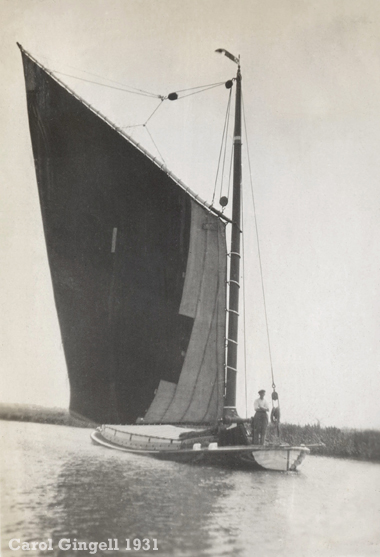
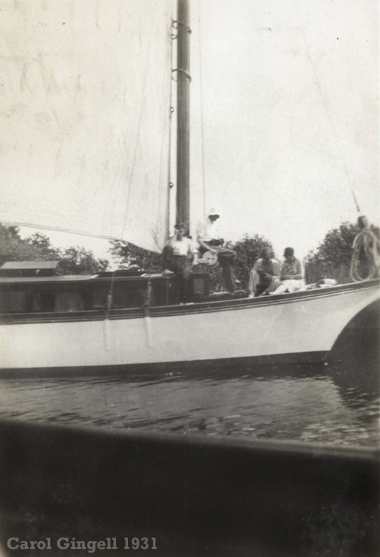
The name board on this trader is barely legible, but I think this is the wherry “Gleaner”. Built by Allen’s of Coltishall in 1894, and originally called Orion, she was owned by the Loddon millers and coal merchants Woods, Sad and Moore for many years. She was 57ft in length with a 14ft beam, the change of name came in 1922 when she was sold to George Gedge of Wroxham who gave her the name of his previous wherry, “Gleaner”. She was fitted with Thornycroft engine at this time, the mast retained for use when loading the wherry. She was later passed on the his son, Jack and eventually ended her days lying in one of the Broads Tours dykes at Wroxham before being broken up during the 1960s.
Here we see a glimpse of the wherry yacht “Rambler” with her distinctive curved bow. Another of Leo Robinson’s fleet, Blakes brochure described her as having large, sliding windows with mosquito nets fitted, a bathroom with hot water laid on and a full size bath, a large saloon with a new piano, electric bells in all cabins and electric lighting throughout. Rambler was fitted with a Thornycroft motor and cost between £17 and £28 per week including a skipper and a steward.
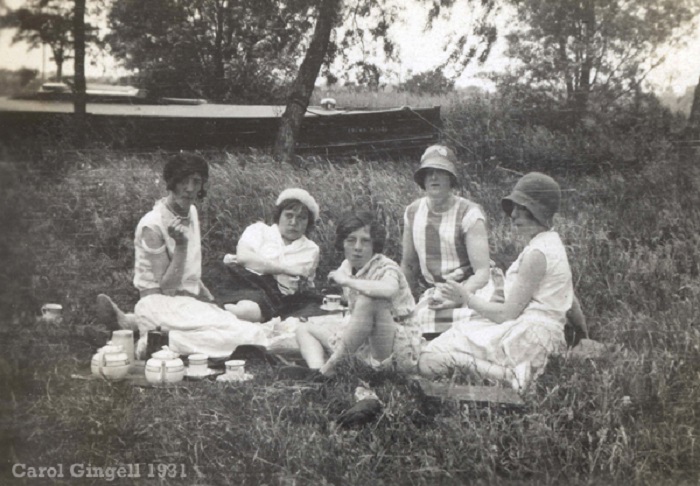
A riverside picnic at an unknown location. The large boat moored in the background is called “Brown Mouse” but I have been unable to find any information about it.
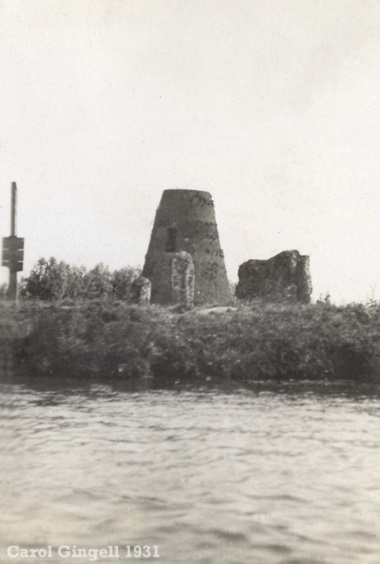
The ruins of St.Benet’s Abbey on the River Bure.
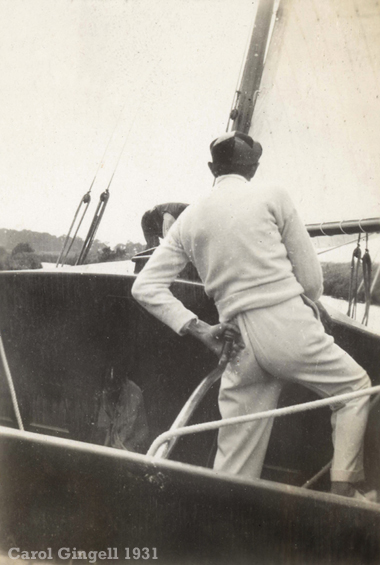
Iverna’s skipper at the helm.
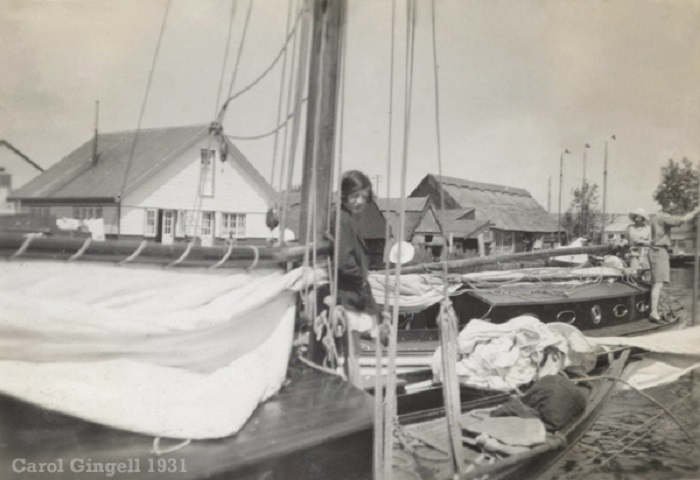
Moored at Potter Heigham in 1931.
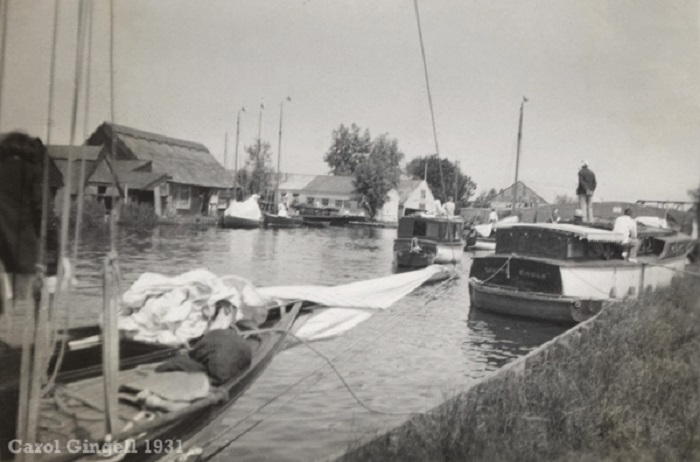
Another photograph of the riverside at Potter Heigham - Applegates boatyard can be seen in the background, just below the old road bridge. The motor cruiser moored ahead of Iverna is “White Eagle” which was yet another of Leo Robinson’s fleet and one of the 39ft “Golden Eagle” class.
Another photograph of Iverna on Wroxham Broad.
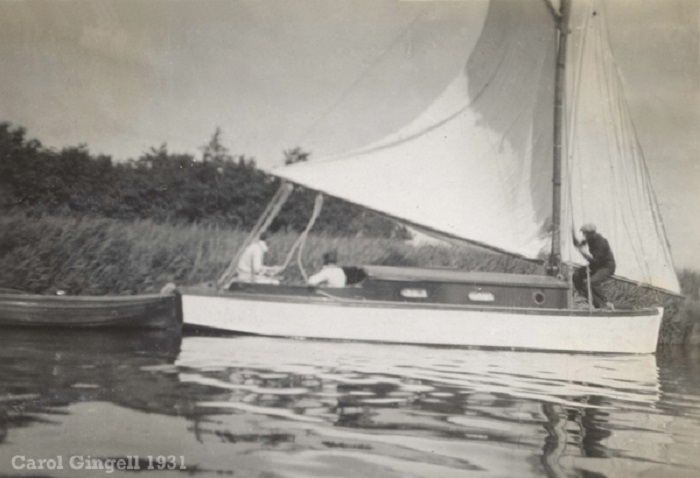
Moored for the evening at an unknown location.
Next
Prev
Top
1900-1949 History
1900-1949 Memories
 << Pages 1-10
Pages 21-30 >>
<< Pages 1-10
Pages 21-30 >>


