
Designed & maintained by Carol Gingell

© C.Gingell 2006-
© Broadland Memories 2006-


 1950s History
1950s Memories
1950s Photo Gallery
In July 1956, Philip and Mildred Marchington travelled to the Norfolk Broads with their young baby from their home in Ashton-


 Top
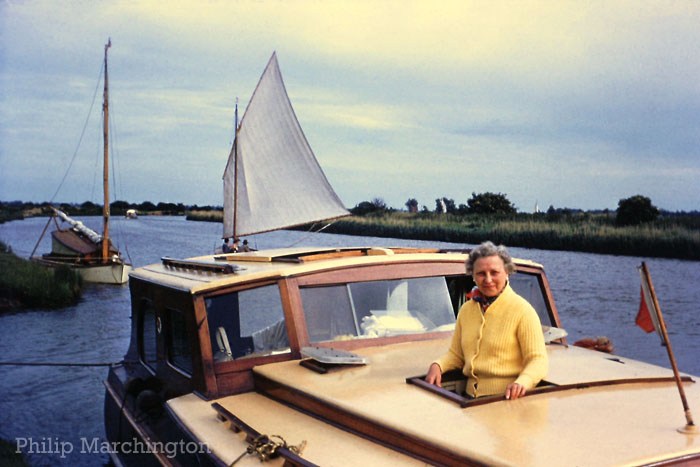
Philip and Mildred with their three month old son, Chris, on board “Sea Curlew” which was built by, and hired from Alfred Ward’s yard at Thorpe St Andrew. The boat was one of the “Sea Heron” class, 28ft in length and sleeping three persons, with two extending single berths in the saloon and a single cabin to the fore. The description for the class in Blake’s 1956 brochure reads: “A new type of cruiser of very attractive appearance. The wheelhouse-
Philip Marchington with son, Chris. Philip would have been 25 years old here and Chris thinks that he would probably have just graduated from Manchester Medical School where he studied dentistry. Following graduation, it is believed he then did his National Service before deciding to sign up full time to the RAF. He was commissioned as a Flying Officer in 1957.
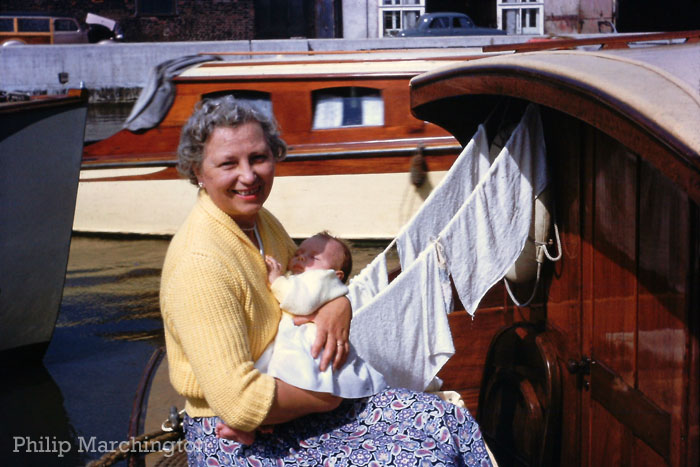
Mildred Marchington pictured with her son. Chris believes that his parents were married in 1955.
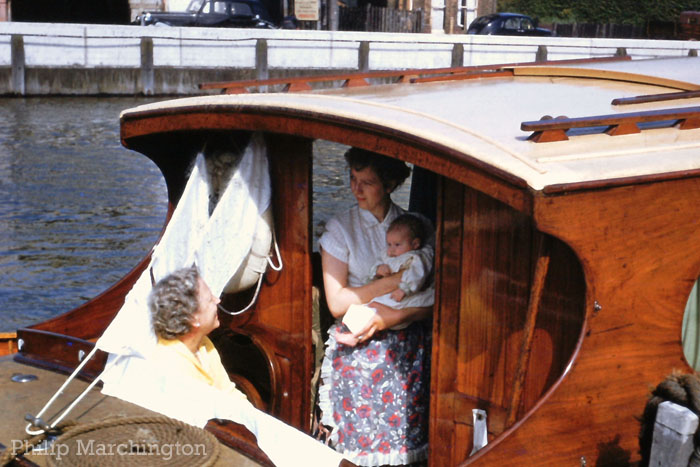
Mildred’s mother, Mary Leech on board Sea Curlew at what appears to be the same location as the previous images. This looks like it was possibly taken on the River Bure alongside Stokesby Ferry Inn.
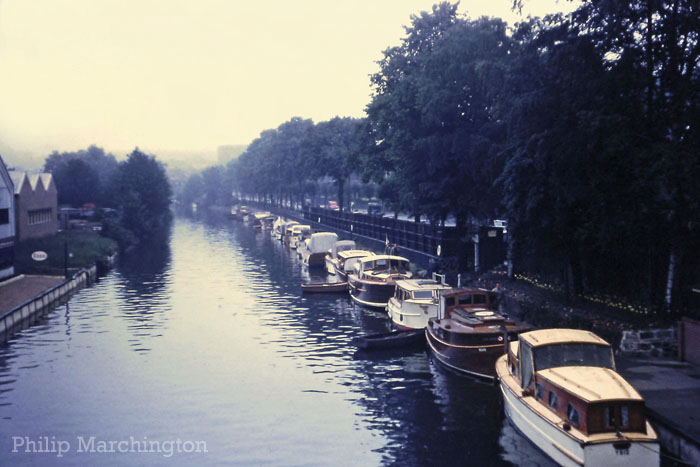
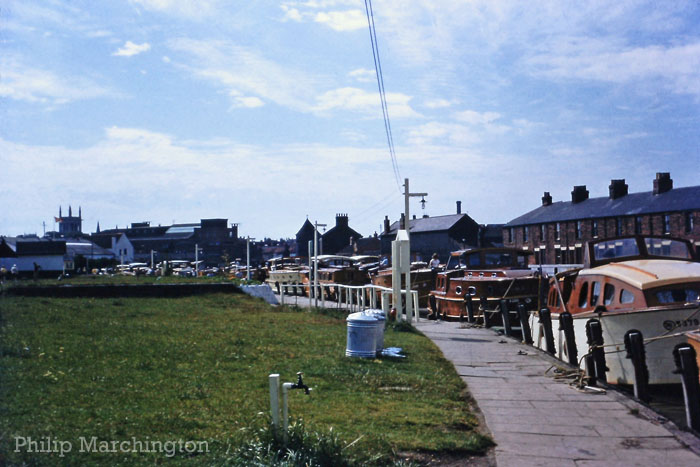
Norwich Yacht Station on a slightly misty day. Facilities at the yacht station at this time were listed as including “Wash-




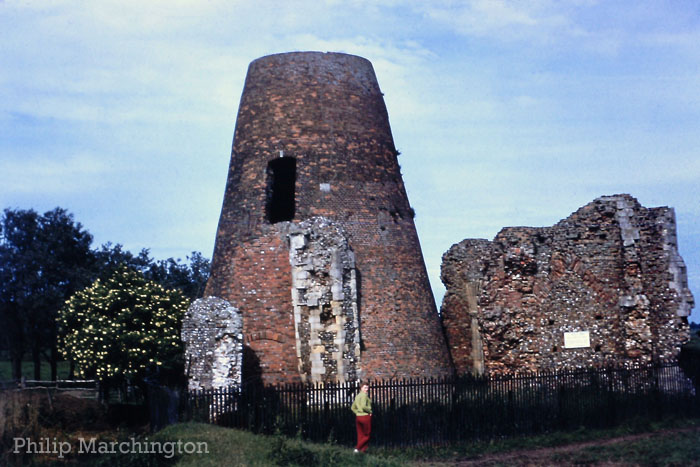
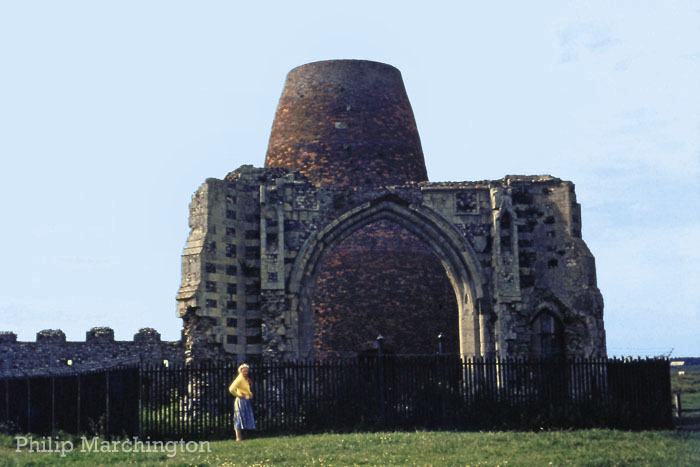


St Benet’s Abbey gatehouse with the ruins of the old mill tower within.
Another photograph taken at St Benet’s Abbey.
The final three photographs from the collection were all taken at Neatishead. This is the Staithe, looking towards the road. A contemporary guide book mentioned that the approach to the staithe from Barton Broad, Lime Kiln Dyke, had only re-
Looking in the opposite direction at Neatishead Staithe.
Neatishead village with the White Horse public house seen on the right. A 1958 advert for the pub listed B&B accommodation, snacks and light meals and rowing boats for hire -

The entrance to the Yare Hotel at Brundall, owned by the Norwich based Steward and Patteson brewery, looking rather picturesque. Brundall also boasted two other pubs at this time -
This looks as though it may also have been taken at Brundall.
A slightly fuzzy photograph, but I’ve included it as it shows a passing River Police launch.
I’m not certain of the location here, but the visible section of the name boards shows that this is one of P.E. Thain’s wherries -
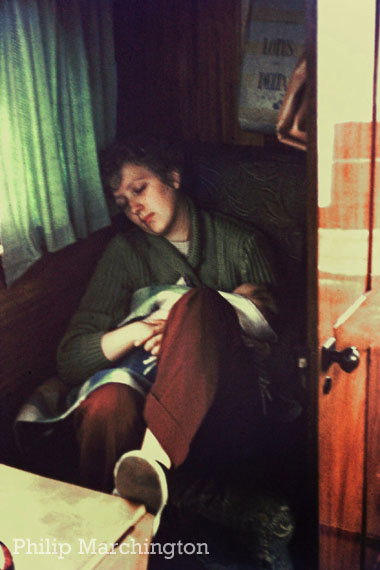
Every new mother, ever! Mildred takes a nap on board Sea Curlew with son Chris in her arms.
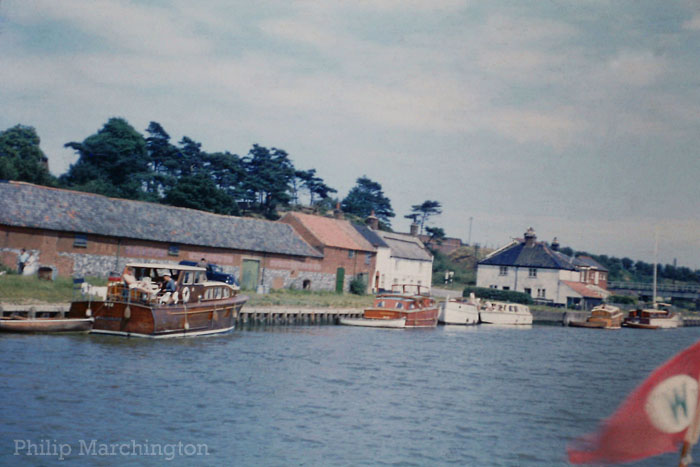
An interesting view of Reedham Riverside -
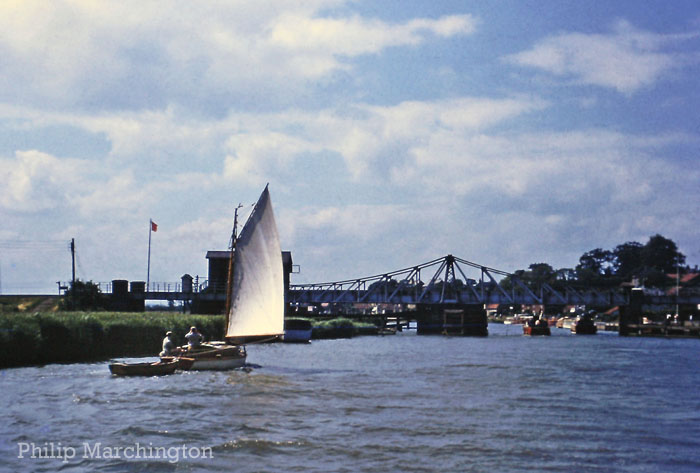
Looking upstream towards Reedham Swing Bridge. In the early 1950s, author John May recounted a visit made to the bridge control box at Reedham whilst cruising aboard Sea Curlew’s sister ship “Sea Heron”. He described the opening procedure carried out by the bridgeman: “He spun a wheel that withdrew bolts on the track. He switched on a hydraulic pump, and an electric motor started of its own accord to charge the battery of accumulators driving the pump. ‘We have the batteries in case of power cuts,’ he explained. Out of the window I saw the end of the bridge lift slightly an inch or two. With another lever the bridgeman withdrew wedges that normally block the central pivot. The bridge settled down again, and started gently turning.”
May was then given the chance to look at the inner workings of the bridge: “We walked across to the centre of the bridge. He pulled open a metal cover, and we went down an iron ladder into the dark, damp and rusty bowels of the central pier. Here were the wedges that held all secure when a train was passing over. Here were the massive wheels and cogs on which the whole structure above us rolled when the bridge was opened.”
A stopover at Great Yarmouth Yacht Station.
Mary Leech pictured with her grandson, also taken at Great Yarmouth Yacht Station -
Another photograph of Mary and Chris at Great Yarmouth. Behind, you can see the distinctive Elanco Craft logo of B425 “Vestella 4”, built by E.C Landamore of Wroxham.
Another photograph of the family aboard Sea Curlew at Great Yarmouth. Going back to John May’s ‘Norfolk Broads Holiday Book and Pocket Pilot”, published in 1952, he describes the handover of sister ship Sea Heron and gives a little insight to the workings of A.G. Ward’s boatyard and also the boat itself. “In Alfred Ward’s sheds at Thorpe, two sister ships of the Sea Heron were being completed. They were due to go out in a few weeks. Four men had built the ‘Sea Heron’ the previous year between November and May. She was Alfred Ward’s own conception, he being a naval architect and a boat-
Baby Chris, fast asleep in his travel cot.
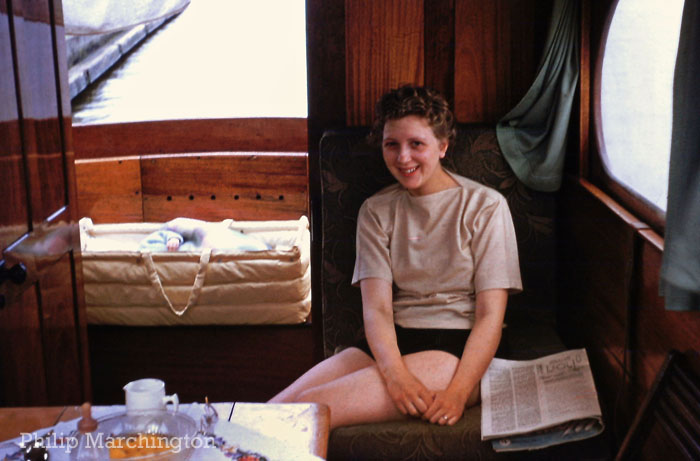
Mildred Marchington in the wheelhouse/saloon. The seating either side of the table extended to provide two single berths, with a third single in a separate cabin to the fore. Between the saloon and the front cabin was a small galley area with a toilet compartment opposite. There was no onboard shower -
I suspected that this was one of Hobrough’s wherries, pictured on the River Yare, and was contacted by Linda Pargeter from the Wherry Maud Trust who believes that this is actually a rare, colour shot of Maud under May Gurney’s ownership. James Hobrough established his civil engineering firm at the end of Griffin Lane in Thorpe St Andrew in 1854, his son (also James) taking over upon his death in 1901. Much of the dredging and piling work around the Broads was carried out by the firm. Many of the old wherries ended their days at Hobrough’s, stripped of their masts and sailing gear and converted for use as lighters to carry coal and dredged mud. The business, along with the remaining fleet of wherries, was bought by May & Gurney Ltd in 1940 when J.S. Hobrough retired. Maud was put up for sale by May Gurney in the mid 1960s, but no buyer was found. She was towed to Ranworth Broad and sunk to shore up the riverbank. In the 1970s, she was raised and moved to Malthouse Broad when the new conservation centre was built. It was from there she was rescued by Vincent and Linda Pargeter in 1981 and they spent the next 18 years painstakingly restoring her.