Cameos of a Norfolk Broads Holiday – Blake’s 1930s Promo Film

I mentioned in the previous blog post that I had another batch of old cine films to edit for Broadland Memories and the first of those has been uploaded today. Most of the films within the archive are amateur efforts, captured during holidays on the Broads taken by various, often unknown, families over the last 80 years. There have also been a few professionally shot, travelogue style films which were produced to show the beauty of the area, or promote boating holidays in the region. The latest upload to the Broadland Memories YouTube Channel is a combination of all of these.

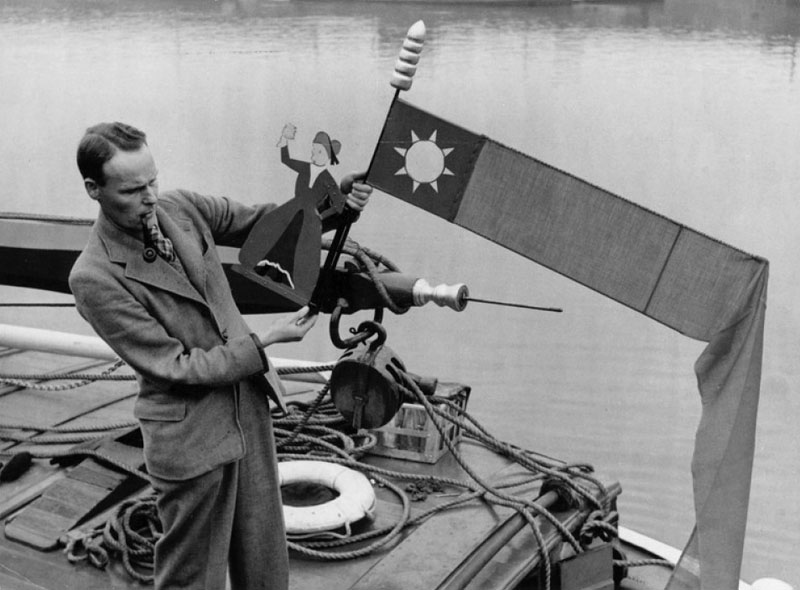
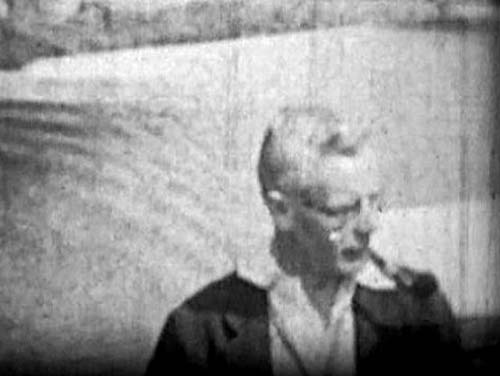
Cameos of a Norfolk Broads Holiday was produced by H. Blake & Co in the 1930s and was one of several films which were available for loan from the company, eager to extol the virtues of boating on the Broads to prospective clients who were perhaps looking for “The Holiday that is Different.” It’s an interesting little curio which was produced very much in house, as the 1935 edition of the Blake’s brochure was keen to point out: “These are not professional films with ‘shots’ specially posed for the occasion, but films of an ordinary holiday party taken during the annual cruise of Mr & Mrs Blake.” I believe that Harry Blake himself can be seen in the still taken from the film (left). By 1939, there were seven such films available, although no details were given as to the content and no clues could be garnered because of the lack of titles, the films just being referred to as A & B (shot in 1934), C & D (1935), E & F (1937) and G (1938). Each were around 10 to 15 minutes long and could be hired on either 9.5mm or 16mm film, a nominal charge of one shilling covered the service and postage charge.

“Looking forward to a Broads Holiday?”

“Wishing to recall happy memories of a past cruise?”

“Entertaining and would like to show your friends how you spent your holiday?”

“Experts say these films are splendid!”

Cine photography was beginning to become popular and, although not a cheap hobby, technology was advancing, and film cameras were becoming affordable for many pockets. Blake’s 1933 brochure included an advert for a 16mm Kodak cine camera at a cost of 13 guineas ( of £13 and 13 shillings), whilst the 1935 brochure carried a full page advertisement for the London based City Sale & Exchange who offered a number of different cine cameras priced at anything between 6 guineas and a whopping £100. To put that latter figure into context, in 1935, £100 would also buy you a brand new, two-door, Ford Model Y car. As the images in the advert show, these cameras were clockwork – wind them up and away you go! They gave a better result than the earlier hand-cranked examples which often produced films of variable speed if the operator couldn’t keep up a steady pace as he wound the handle.

No date is given for Cameos of a Norfolk Broads Holiday, but I suspect it dates from the mid 1930s. The quality is not the greatest, but it is a rare survivor and an interesting example of how the media of the day was utilised to promote the Blake’s name. They were probably reproduced in limited quantities, so I was rather pleased to find this one. My thanks, as always, to Video Impact at Loddon for digitizing this from the original 9.5mm cine film for Broadland Memories.

Posted in Uncategorized | Comments Off on Cameos of a Norfolk Broads Holiday – Blake’s 1930s Promo Film

Victorian Broadland in colour

I’ve been quiet for a while as the onset of Spring brought with it the inevitable distraction of the seemingly endless task of taming and keeping the garden under control. Sadly, we’ve not found a buyer for the house yet either, so the dream of garden downsizing and house upsizing to provide some much needed study space has to wait for a little longer. As always, I’m still doing something Broadland Memories related behind the scenes and there have been some interesting new additions and purchases over recent months. More on those in a while, but I thought I’d highlight a couple of rather interesting items which I bought for the archive very recently.

The film section of the Broadland Memories archive is always popular, with cine footage from the 1950s, 60s, 70s and 80s bringing back fond memories for those who holidayed on the Broads during those decades, whilst earlier films provide an evocative glimpse into boating in Broadland during the inter-war years. From amateur offerings to professionally produced promotional shorts and news reels, the Norfolk and Suffolk Broads have been captured on film since the birth of the moving image, engaging audiences in homes and cinemas nationwide. The Broadland scenery has been the stunning backdrop for a number of television productions and cinematic releases over the years too, but during the Victorian and Edwardian eras, before electric theatres and picture houses began to awe their clientele with the first true moving pictures, a simpler form of pictorial entertainment was found in the magic lantern shows which toured the cities, towns and villages.

With origins dating back to the 17th century, magic lantern projectors worked by using one or more glass lenses and a light source to illuminate illustrated glass slides and project them on to a wall or cloth sheet. The slides were initially hand painted pictures, later becoming photographic prints and transfers as the technology developed. Early illumination for the projectors came from candles and smokey oil lamps which were superseded by more efficient lighting sources – firstly, by Argand oil lamps and then by “limelights” which produced a much brighter light using a combination of combustible gases and rather unpleasant chemicals (quicklime). Limelights were quickly utilised in theatres and music halls to illuminate performers on stage and gave rise to the term “in the limelight” being used for someone who is in the public eye. In the 1820s, the electrical Arc Light was developed, and it proved to be perfect for use in projectors as it produced an extremely bright point of light. These improvements in lighting and lens technology meant lanterns were able to project bigger images and could therefore be used in much larger venues, giving rise to the travelling lantern showman who would both entertain, educate and sometimes scare the living daylights out of eager members of the public. The “phantasmagoria” horror slide shows of the Victorian era brought the supernatural to life with the clever use of projectors, animated slides, smoke machines and eerie sound effects! Such was the popularity of magic lantern shows that, by the 1880s, a number of companies were mass producing sets of slides which encompassed a huge variety of subjects. Both black and white and hand coloured, transfer printed photographic slides were sold is large numbers. Amateur photographers were able to produce their own lantern slides too, and painting kits were available for those with an artistic bent who wanted to give their monochrome images a little more life.

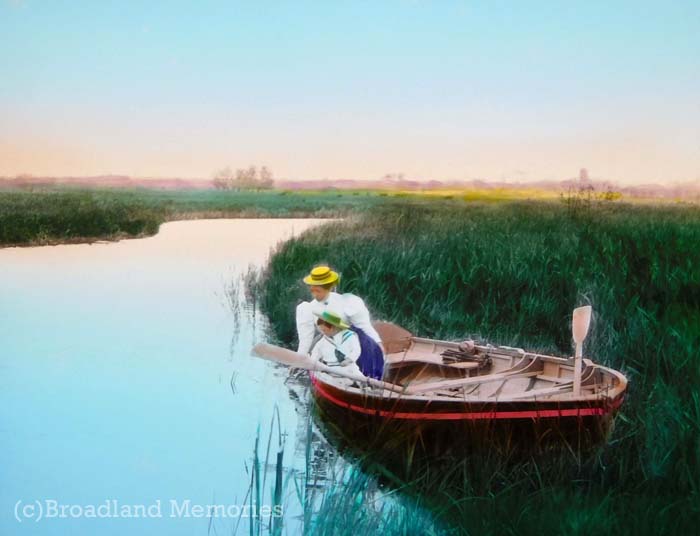
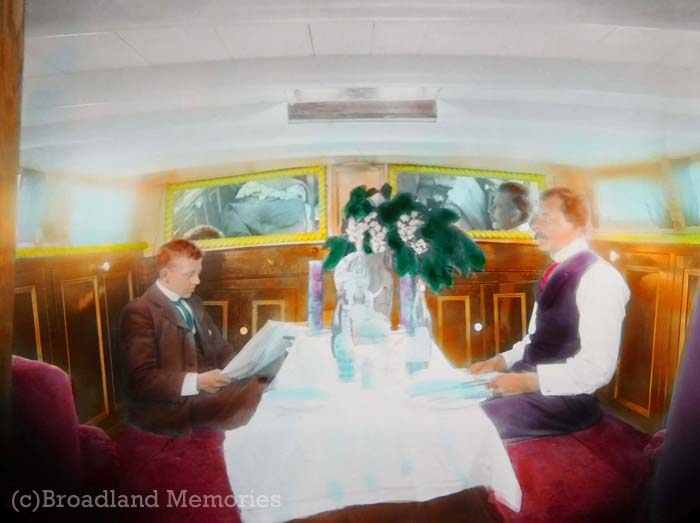
A typical lantern show could include classic folk tales, biblical dramas or popular stories of the day. Many showmen also used the medium to give illustrated talks on natural history, science and travel. Which is where the latest acquisitions for the archive fit in. Giving a colourful glimpse of the late, Victorian era, this pair of hand painted slides date from around 1900 and depict two Broadland scenes, captions for which were written on by hand. I’m not sure if these were commercial slides or produced by a keen amateur, but they are not images which I’ve seen before.

“On the River Ant – Norfolk Broads” – a delightful scene showing a woman and young boy, dressed in suitable nautical attire and straw boater, gazing at the water from a rowing boat.

“Cabin of old time Sailing Yacht “Augusta” – Norfolk Broads” – a very interesting image which shows a moustachioed gentleman and a younger lad sat at the table in the rather sumptuous saloon of “Augusta”. The interior woodwork is shown in convincing mahogany hues, with deep red velvet upholstery on the seating. Whilst the young chap on the left is pictured in a smart, brown suit with green tie, the gent on the right is sporting a rather fetching purple, velvet waistcoat with similarly toned trousers. The colourisation didn’t extend to much of the tableware or the mirrors at the far end of the cabin which, along with the mahogany panelling, are trimmed with what appears to be yellow rope. How accurate a portrayal of the genuine colour scheme this is, and how much can be attributed to artistic licence is anybody’s guess! I don’t have any information on “Augusta” – if you can help, please do get in touch.

I had begun work on the last set of photographs from the Charles Hannaford Collection before the garden demanded my full attention – I’ll get those finished and online as soon as I get a bit of free time again. I recently collected the latest batch of cine films which have, kindly, been digitsed for Broadland Memories by Video Impact at Loddon once again. This is another job for the summer months as I can get a bit of film editing done when I have the odd hour or two to spare. The current batch includes some more cine footage from the 1960s and 1970s plus a very rare Blake’s promotional film from the 1930s which were sometimes filmed by Mr and Mrs Blake themselves during their annual holidays on the Broads. Sadly, Video Impact are no longer able to transfer 16mm cine films for me – I currently have three rather large reels of 16mm, one of which was shot during the Yare Navigation Race of 1979, the others feature a 1950s/60s holiday on one of Herbert Woods “Delight” class of cruisers, plus some unknown Hickling footage. I’m going to have to find an alternative means of getting these digitised, which is likely to be charged at the standard going rate. This will, sadly, make the purchase of further 16mm films rather cost prohibitive. I’m extremely grateful to Video Impact for the films they have generously transferred for the archive without charge in the past.

I’m always keeping an eye out for new photographs, and several more collections have been bought this year, the most recent being a set of photographs taken during a holiday on the sailing cruiser “Pandora” in September 1937. There are still a fair few Edwardian images which are waiting to be sorted out for the website too, along with albums from the 1930s-1950s.

One of the most exciting new additions in recent months came via an email which arrived out of the blue, asking if I would be interested in a 1914 journal documenting a Broads holiday taken by a group of Bath businessmen in 1914. All I can say is, wow! I just wish I could find such treasures hidden away in my loft. The journal has over 100 pages and is packed full of photographs alongside a most wonderful written account. This is a precious, family item which the grandsons of one member of the holiday party have very kindly photographed for me. It’s going to be a mammoth task to get this transcribed and converted into digital form, but what a fabulous piece of local history. More details will follow in a separate blog post.

It looks like I’m going to be busy come the autumn.

Posted in Uncategorized | Comments Off on Victorian Broadland in colour

Whitlingham Church – Folklore and Folly

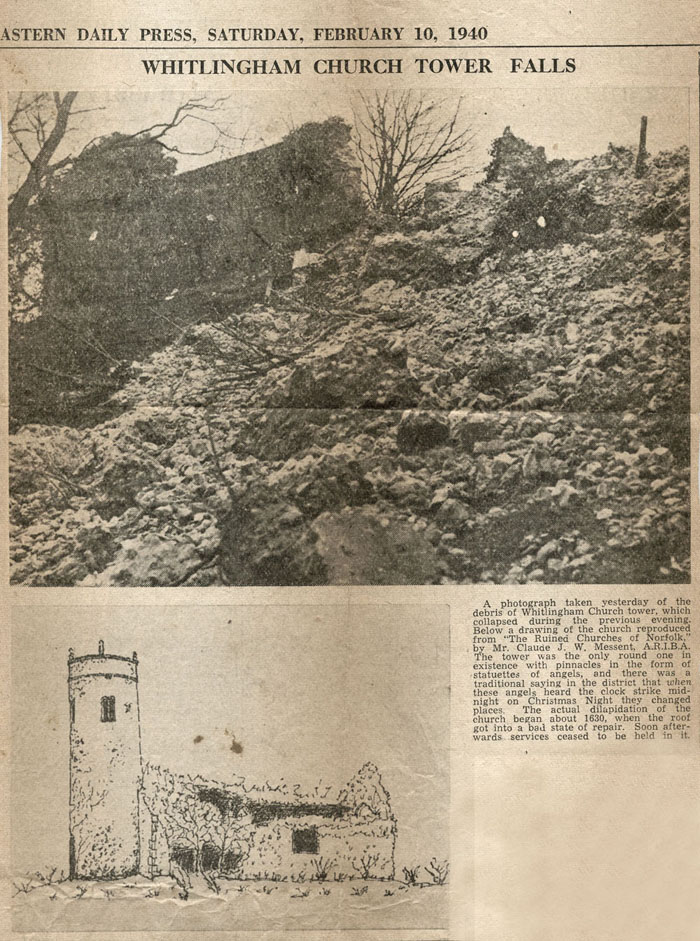
I got a little sidetracked last week by an unexpected ‘found’ treasure. A trip to Norwich is never complete without a trawl round the secondhand bookshops, ever on the lookout for interesting, local history related reading and research material. I picked up a tatty, but cheap little 1938 guide to Beccles last weekend, tucked carefully within the foxed and battered pages of which I discovered a newspaper cutting dated to the 10th of February 1940. It reported on the collapse two nights earlier of the ruined church tower which overlooked the River Yare at Whitlingham, near Norwich.

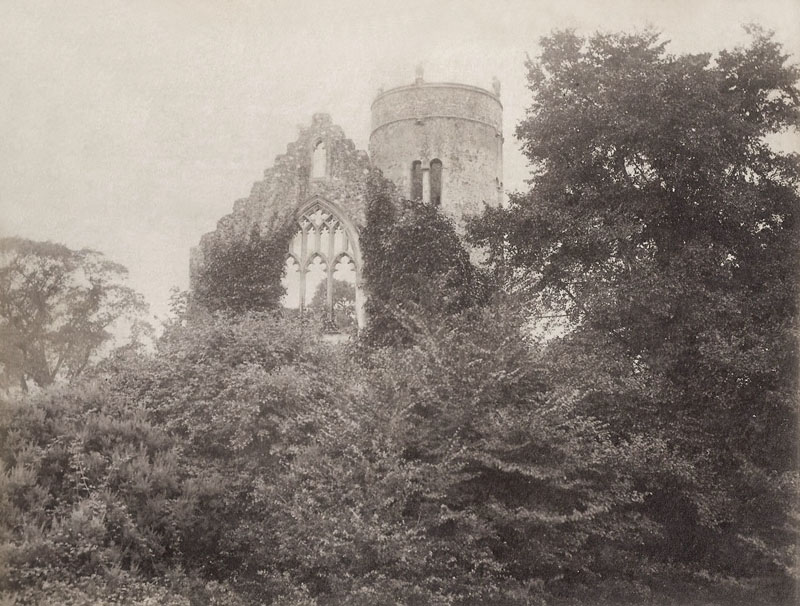
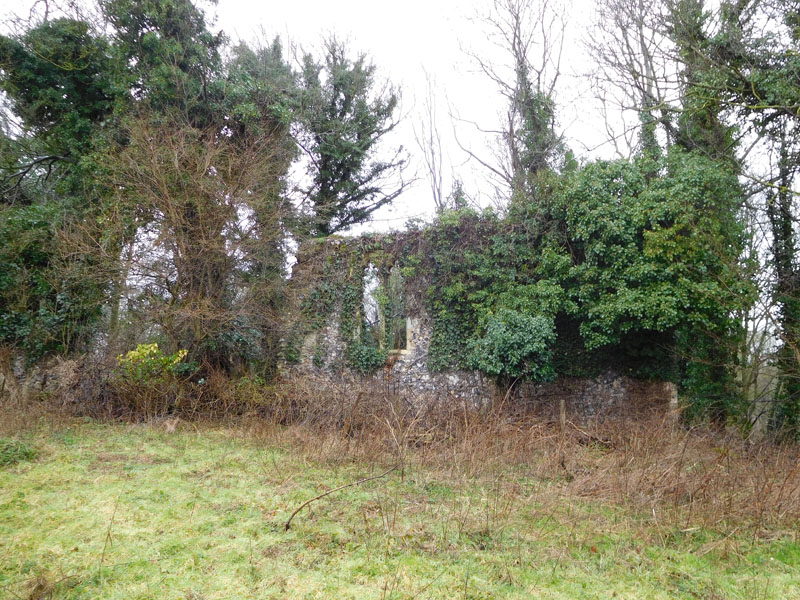
I’ve got a handful of old photographs and postcards which show the church tower and remains of St Andrew’s at Whitlingham from the 1880s, and the earlier years of the 20th century. It was a well known landmark which had become a popular spot for courting couples to take romantic walks during the Victorian era. It’s hard to imagine when you see the site now, with so very little of the ruins still standing, that it was once the pretty scene which you can see in the postcard below. The card itself dates from around 1903-1905, but the photograph it features was probably a little older and shows the view looking across Whitlingham Lane.

The Norfolk Heritage Explorer records show that the the tower was probably Saxo/Norman in date, with a 14th and 15th century nave, chancel and south porch. The 1940 newspaper article mentions that the tower was noted to have been in a dilapidated state by 1630, with the church subsequently falling in to disuse. It seems that some work was done on the ruins to consolidate and repair parts of the tower and remaining walls during the second half of the 19th century, effectively turning it in to an antiquarian folly, designed to enhance the romantic and picturesque nature of the park.

The photograph above was taken during the late 1880s – in a contemporary guide book, “Land of the Broads”, author Ernest Suffling provided us with an interesting piece of local folklore relating to the ruins: “The church is planted right upon the edge of a precipitous, wooded hill, from which a good view of the surrounding district is obtained. The circular tower is nearly intact, but the church itself is roofless, and the interior contains a congregation of trees, in flourishing condition. The tower is surmounted by figures, symbolical of the four evangelists. These stone figures, according to local tradition, walk round the edge of the tower at midnight, meet, shake hands, and then resume their positions. This sight cannot be seen by married persons!”

The report below, which was published in the Eastern Daily Press on February 10th 1940, tells a slight different version of the story, where the statuettes were angels who changed places at midnight on Christmas Night. The accompanying photograph shows the collapsed tower, whilst the illustration was taken from Claude Messent’s “The Ruined Churches of Norfolk” which was published in 1931.

Little now remains of the ruins which lie close to the A47 southern bypass, the east wall of the chancel having been demolished in 1997 after being deemed unsafe. Along with more detailed information on the history of St Andrew’s, the excellent Norfolk Churches website also includes a number of images of the remnants, but I took a wander down there myself this weekend and took the following photographs.

Taken from the south, this is pretty much all that is left of St Andrew’s. Whilst the land on this side of the church is relatively flat,when viewed from Whitlingham Lane on the north side, you can see how precariously it was perched on the edge of a very steep slope.

The inside of the remaining wall.

“LeLy 1891” – graffiti left by one Victorian visitor.

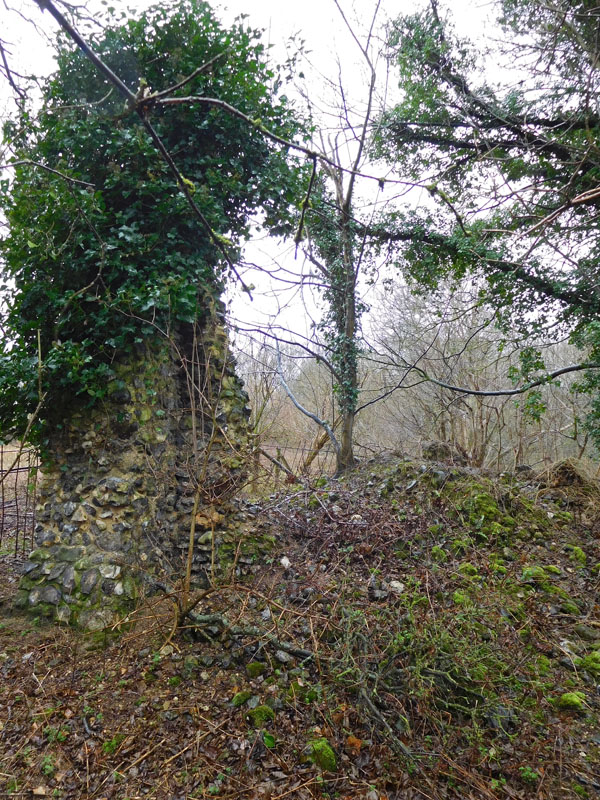
This is where the tower once stood, the buttress and a pile of flint and rubble is all that now remains. The traffic thundered past on the adjacent southern bypass as we left the ruins, climbed over the gate and trudged back up the muddy lane towards Whitlingham Country Park as the rain became heavier. It all seemed so far removed from the tranquil, romantic idyll portrayed in the early postcard.

Posted in Uncategorized | Comments Off on Whitlingham Church – Folklore and Folly

Herbert Woods – Glitter of Light 1957

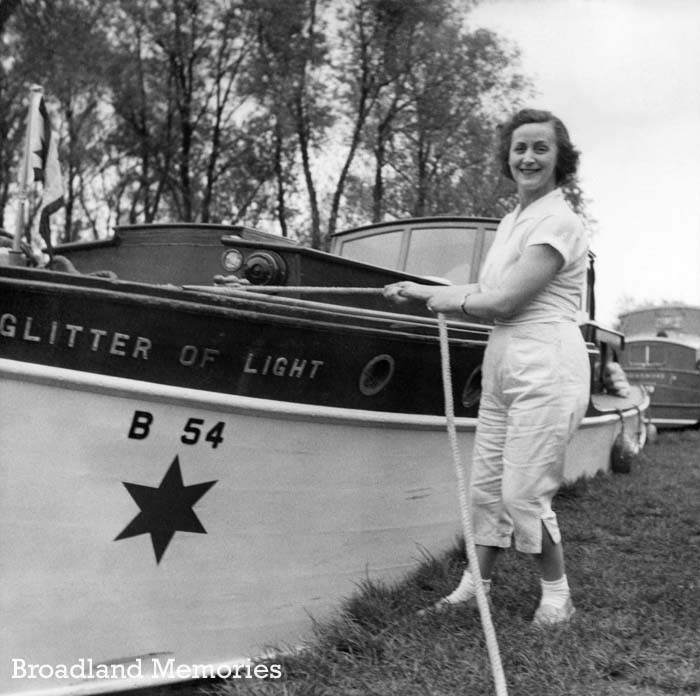
If you follow Broadland Memories on either Twitter of Facebook, then you’ll have spotted a photograph taken on board the motor cruiser “Glitter of Light” in the late 1950s which I posted recently as a sneak preview to the next collection I was working on for the website. It is one of a large batch of photographs which were taken during holidays on the Norfolk Broads over a span of eight years between 1950 and 1957.

The collection is taken from two photograph albums which were purchased for the archive a couple of years ago, interesting because they show the photographer visiting the Broads as part of a group of friends for the first part of the decade, then returning in the later 1950s as a family with two young children. In 1950, the group hired one of the “Spangle” class from George Smith and Sons of Wroxham, thereafter, the boats hired were exclusively from Herbert Woods fleet at Potter Heigham, beginning with “Gleam of Light” and following on with “Gleam“, “Glow” and “Ring of Light“. As a family, they hired “Shaft of Light” and “Glitter of Light” in 1956 and 1957 respectively. I’m going to work on and upload the photographs in batches as there are so many of them, but the first set which span 1950 to 1953 have been uploaded to the main Broadland Memories website today. The rest will follow over the coming weeks.

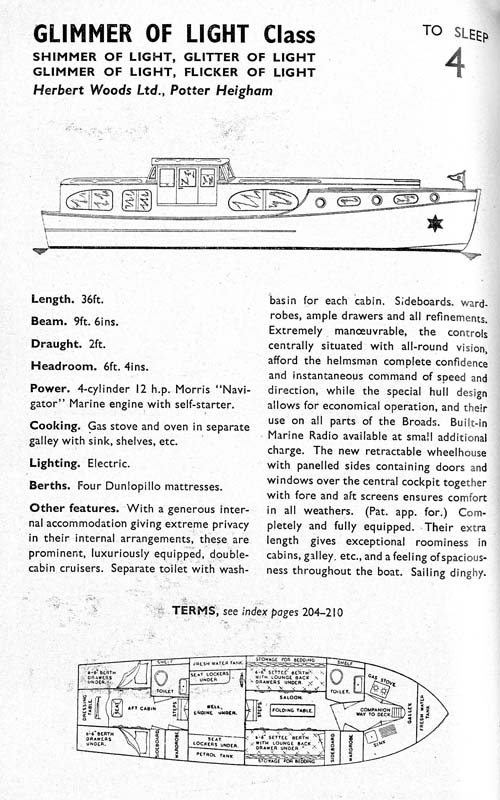
It’s lovely to have such a comprehensive collection featuring the Woods fleet during that era and the photographs from 1957 are rather special because they include a number of interior shots of “Glitter of Light“, which is something that I don’t find very often amongst holiday photos . These days we don’t hesitate to snap away and anything and everything with phones and digital cameras, but back when film was king, photographic subjects were often very considered because of the limited number of frames on a roll and the costs involved in both buying the film and having it developed, although there were many amateur darkrooms. The “Glitter” set will come later, but I thought I’d preview a few of them on here as an introduction to the collection. “Glitter of Light” was one of a class of four vessels which were originally built as five berth cruisers during the second half of the 1930s – these included “Glimmer“, “Flicker” and Shimmer“. The class were 36ft in length with a galley and single berth to the fore, a bathroom (fitted with a 5ft bath), with locker and pantry space opposite came next, followed by the saloon which contained another two berths. Beyond the wheelhouse was a further, two berth cabin with a second toilet and washbasin. It has been well documented that most of the Woods fleet spent the years of the Second World War, moored on Hickling Broad to prevent enemy sea planes landing. Over time, most of the fleet sunk and were in need of major restoration and refurbishment when they were eventually towed back to Potter Heigham once hostilities had ceased. In the biography written about her father, “Herbert Woods – a Famous Broadland Pioneer“, Jennifer Woods noted that compensation was available to assist with rebuilding the fleet  and part of these renovations included the conversion of the wheelhouse roof to the new, patented “Broads-Haven Retractable Wheelhouse” which was designed to make passing beneath bridges both quicker and easier. The initial post war brochures showed the class with it’s bathroom still intact, but by 1952 the bath had disappeared as can be seen from the entry in that years Blake’s brochure, above left. The fifth berth in the fore cabin had also been removed and the galley had been refitted and enlarged to take its its place.

By the early 1950s, the Broads-Haven empire had become a self contained, one-stop shop catering for all of its clients needs. Not only had the fleet expanded with the purchase of both Applegate’s yard next door and Southgates at Horning, but Herbert Woods had also taken on the Broads Haven hotel on the opposite side of the road and the Bridge Stores. He also established a market garden in Potter Heigham which provided fresh fruit and vegetables for the shop and the hotel. Beehives ensured a plentiful bounty of honey and a large flock of chickens supplied eggs, the hens being housed in old, single decker buses which had been stripped out and fitted with laying boxes.

The early years of the 1950s had been a period of continued recovery following the war, the Broadland hire fleets had all suffered from the ravages of neglect and, once refurbishment had been completed, many yards began a programme of building new additions. Post war, cruising distances had initially been limited due to petrol shortages and the rationing of some foodstuffs also continued until 1954. The “Anchor’s Aweigh” hints and tips booklet which was sent out to all clients by Blake’s a few weeks ahead of your holiday advised that emergency ration cards should be obtained from your local Food Office prior the your holiday. Sadly, Herbert Woods passed away in April 1954 following a major heart attack. There was a combined fleet of 139 motor cruisers, sailing vessels and day boats at this time.

By the second half of the 1950s, rationing had ended and Broadland was regaining it pre-war popularity as visitors flocked to the region. The advancements in motor cruiser design, fitted out with all the creature comforts of home, broadened the appeal of boating as a family holiday and our family of mum, dad, and two young girls, enjoyed trips aboard “Shaft of Light” and, pictured above in 1957, “Glitter of Light“.

In his 1952 guide, “The Norfolk Broads Holiday Book and Pocket Pilot“, author John May set the scene and painted an evocative picture: “You arrive by mysterious backways at the boatyard. You glimpse the inside of sheds that smell aromatically of wood shavings, and see half-built boats tied by wooden battens to the roof beams. You walk through to a neat boarded quay, and there before you is the gently flowing river. The sun shines, the sky is blue and there are Broads craft everywhere. People are wearing carefree summer clothes, the waterside grass is very green, and pervading the peace of it all is your own feeling of happy expectancy. ‘This is your boat sir,’ the man says. You are shown a glistening vessel riding demurely at her moorings. This lovely craft, worth literally a small fortune, is yours entirely to eat, sleep and adventure in, through all the coming holiday. You step aboard – and what comes next?”

On board “Glitter” in 1957, looking towards the fore cabin which housed the galley. “Cooking is a new pleasure in your craft’s neat miniature kitchen,” enthused Blake’s guide to motor cruising on the Broads in 1956. “Everything is complete and ready to hand, gas stove (with cylinder gas), electric light and running water at sinks.”

Teatime in the saloon with the ubiquitous bobble hats – perfect for boating as they wouldn’t get blown off in a sudden gust of wind!

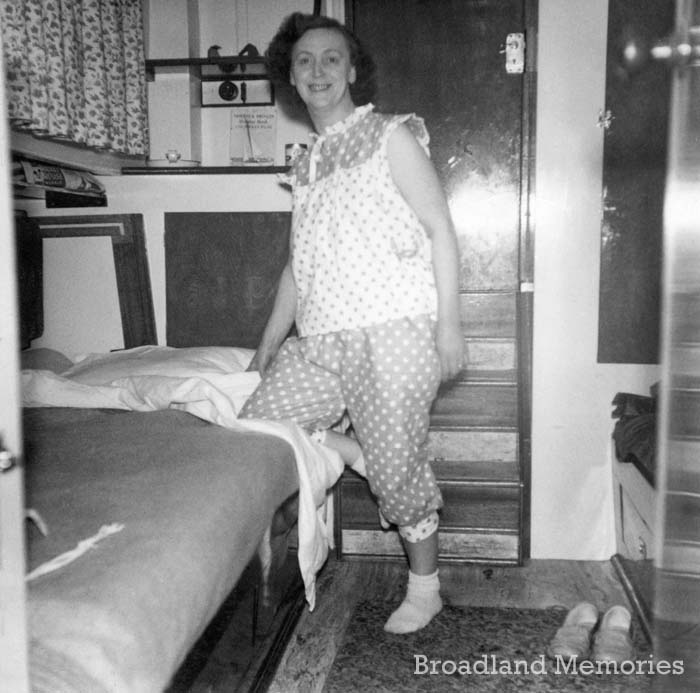
Ready for bed in a rather fetching set of pyjamas. “It’s a luxury cruise!” Blake’s brochure continued: “You’re in your own private suite with no responsibilities, nothing to heed but the orders of your own sweet fancy.”

Where do I sign up?

The collection are not all of the highest quality, but they are cleaning up quite nicely with digital restoration and remastering, and are another valuable record of the history of boating on the Broads. The remaining photographs will follow soon but I hope you enjoy the first installment in the meantime.

Posted in Uncategorized | Comments Off on Herbert Woods – Glitter of Light 1957

Bureside House, Wroxham

I’ve mentioned in the past that some of the email enquiries that come in to the website are from people researching their family trees, but I’ve also received a few in the past from homeowners who are hoping to discover more about the history of their Broadland property. It’s not really something that I come across very often, but it’s another angle to the history of the area and can also be quite interesting at times.

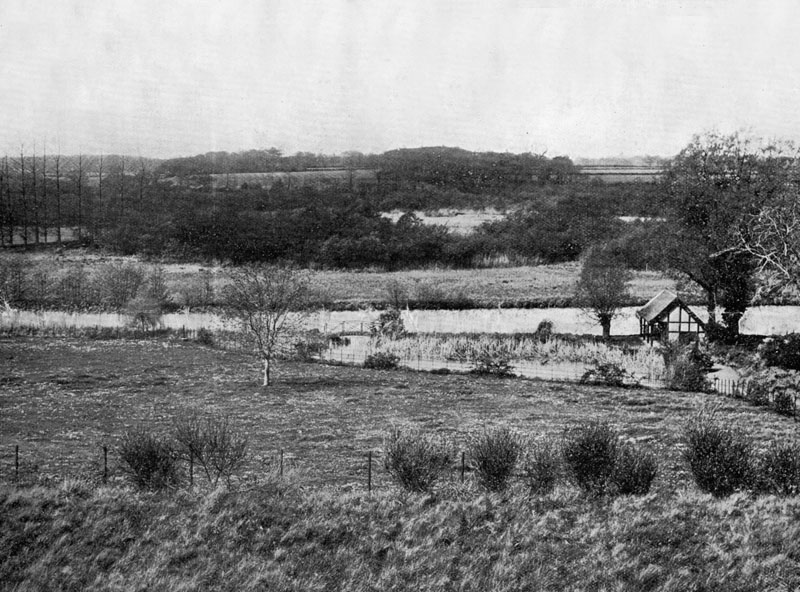
The latest addition to the website comes from Trevor Curson who contacted me to provide a name and location for a mystery house seen in the photograph (left) which was part of a c1900 collection that was uploaded couple of months ago. It came from an album of photos and had been captioned as “Houseboat House near Wroxham“. I didn’t recognise it and various suggestions were put forward via the Broadland Memories Facebook page,with the general consensus being that it was probably upstream of Wroxham Bridge, towards Belaugh. Trevor recognised it instantly as being “Bureside” which overlooks the River Bure in Skinners Lane at Wroxham, beyond St Mary’s Church. Trevor told me that the house has since lost the large conservatory that you can see on the right, replaced with a more substantially built extension.

Trevor also mentioned that he had a copy of an auction brochure for the house, produced when it came up for sale on May 29th 1920 and he asked whether it would be of any interest. Absolutely! He kindly loaned me the nine page document which includes full details of the house, the grounds and ancilliary buildings, along with photographs, but it turned out that this wasn’t just any copy of the brochure. It appears to be the copy which was owned by the winning bidder and subsequent owner, Major Sigismund William Trafford of Wroxham Hall and it is adorned with scribblings of figures paid for the house and fixtures and fittings, plus the signed receipt on the reverse to acknowledge his purchase and payment of a deposit. I have scanned the whole brochure which you can view in PDF form via the Paper & Ephemera section of Broadland Memories, but having done a little bit more research I thought it might be worthy of a blog post.

The drive and main entrance to Bureside from the 1920 auction brochure

Bureside was a rather magnificent house which stood within a plot of around three acres and boasted commanding views across the River Bure and surrounding countryside. It was built in the 1880s, and was being sold in 1920 with a conveyance of sale attached to the deeds dated to the 20th November 1889. The brochure mentions that the grounds included tennis and croquet lawns, a paddock and water garden extending to the river with a rustic bridge and an octagonal, thatched summer house. Alongside the river was a large boathouse with double doors, a spacious verandah and loft space above. There was a productive kitchen garden with fruit trees, a 20ft x 14ft hot house, and herbaceous and rose borders. A substantial stable block housed a roomy loose box and stall, harness room, tool house, dog run and kennel, a large coach house/garage with sliding doors, hay and straw loft above the whole lot and a “man’s room with stove”. Outside was a paved carriage washing area with water pump, a pigeon locker, wood yard and men’s convenience. The photograph below also featured in the brochure and shows the view from the house looking across to Belaugh Broad, remarkable for the lack of trees lining the riverside compared to the same stretch of the Bure today. The boathouse with its verandah can be seen on the right.

The house itself was seemingly built with all the mod cons of the 1880s and was fitted throughout with oak flooring, staircases, windows and doors. Fireplaces, or stoves were, naturally, fitted in all rooms. Set over three floors, with a cellar containing two meat safes and a fitted wine cupboard below, the entrance porch led into a large “lounge hall” from which the 17′ 9″ x 14′ dining room and  21′ 10″ x 18′ 6″ dining room could be reached. From the dining room, a doorway led through to the huge conservatory with its “tesselated floor” and plant staging. The kitchen featured a tiled range and back boiler to provide hot water for the house, whilst a scullery contained another range and the copper (for washing clothes). There was also a “Housemaid’s Pantry” with sink, shelving, cupboards and drawers. Outside was an enclosed yard where the coal shed could be found, along with a “Knife House” and “servants’ convenience”.

Back in the main house, the oak staircase led from the hall up to a large landing, which provided access to three large family bedrooms (one of which opened on to a rather spendid balcony), a bathroom with fitted bath, lavatory and basin, all with hot and cold water supply, plus a separate W.C.  and a smaller “servants’ bedroom”. A second staircase on the rear landing took you up to the second floor which, I presume, contained further servants’ accommodation in the form of a small sitting room and three smaller bedrooms, one of which was fitted with a washbasin – cold water supply only for the staff!

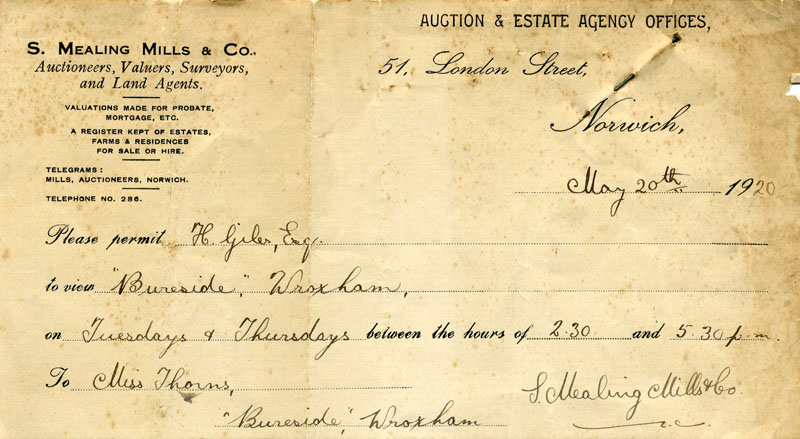
The final price when the hammer went down on the 29th of May 1920 was £4,675 plus an additional sum of £62 and 18 shillings payable for the fixtures and fittings. That was an astonishing amount of money back then, but a pretty impressive riverside residence it has to be said. The brochure contained details of viewing days and times prior to the auction – but prospective purchasers or their agents were required to obtain a viewing card from the auctioneer to gain admittance. Paper clipped to the front of the brochure was one such viewing slip, permitting access for an H. Giles esq., and addressed to Miss Thorns, daughter of the late R.E. Thorns who was the previous owner.

Viewing slip for Bureside 1920

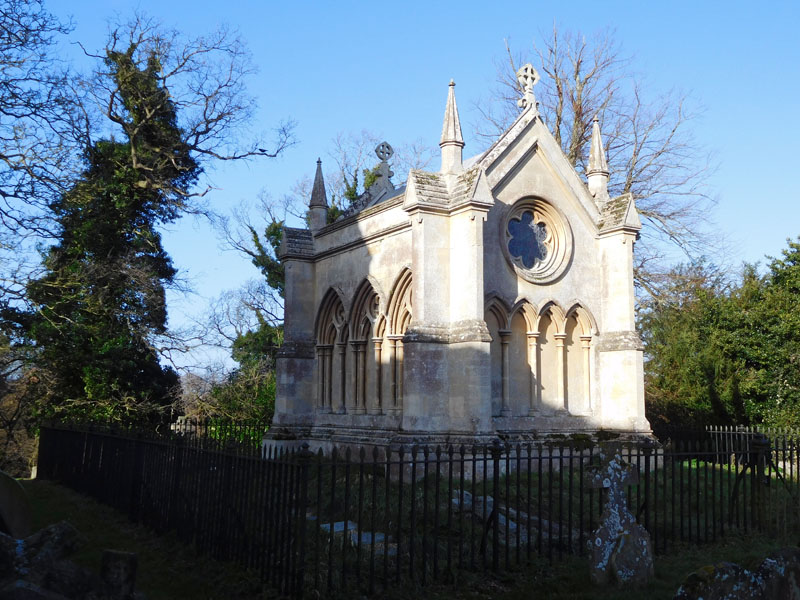
The new owner of Bureside was Major Sigismund Trafford whose family had resided at Wroxham Hall since the early 1800s. Major Trafford served in the Rifle Brigade between 1878 and 1909 and was the eldest son of Edward Southwell Trafford. The family lineage can apparently be traced back to the reign of King Canute. The Trafford mausoleum which stands in the church yard of the nearby St Mary’s has been the final resting place for the family since it was erected as a memorial to Sigismund Trafford Southwell who died in 1827.  His widow commissioned the renowned architect Anthony Salvin to design the English gothic, chapel style building – incidentally, he was also responsible for the refacing work done to Norwich Castle in 1835.

My thanks to Trevor Curson for allowing me to publish the brochure via Broadland Memories. I’d love to know how the current interior layout compares to that described within the 1920 sales particulars and how many of those original features have survived. If you have any memories of Bureside, or any further information on it’s history, then please do get in contact.

Update 19/01/2026 – a further article on Bureside House has been added, recalling the memories of John Cannell who was evacuated to the house during the Second World War. https://www.broadlandmemories.co.uk/blog/2026/01/wartime-memories-of-bureside-house-wroxham/

Posted in Uncategorized | Comments Off on Bureside House, Wroxham

The Last Wherry – Albion documentary 1998

In 1998, the BBC produced a documentary about Norfolk wherries as part of its Matter of Fact series. “The Last Wherry” told the story of how the trading wherry Albion survived and of the people who saved her, featuring interviews with Norfolk Wherry Trust founder Roy Clark, skipper Kim Dowe, archivist Mike Sparkes, former wherryman John Fox and others, including Vincent and Linda Pargeter who were in the final throws of restoration of another trader, “Maud”, at that time. It’s a program which, sadly, is unlikely to be re-shown, but it has recently been uploaded to YouTube and I thought I’d share it here as it is a great piece of local history.

Norfolk Wherry Trust founder Roy Clark, pictured with Albion’s ‘Jenny Morgan’ in 1952

Roy Clark had known wherries from a young age, but it was whilst serving in France during the Second World War that his interest in them was rekindled. Amidst the chaos and destruction he witnessed on the beaches of Normandy, he stumbled across a small dyke where a patch of yellow flag irises were growing, instantly reminding him of home. His thoughts drifted back to the wherries which were still trading on the rivers when he was a young lad and he wondered how many, if any of them had survived. He vowed there and then to seek out what remained, with the aim of preserving one of the black-sailed traders. On his return, he managed to gather support for his venture and, in February 1949, the Norfolk Wherry Trust was formed. There were no longer any traders still sailing and J.S. Hobrough’s civil engineering yard at Whitlingham became the final home of many of the former cargo vessels. Some were fitted with engines, some being used as unpowered lighters for dredging and piling work. When their condition deteriorated to a point where it just wasn’t viable to keep them afloat they were fated to become props to shore up the riverbank, lost forever beneath the rhond. In Norwich, the Wherry Trust found a suitable candidate for preservation and restoration in “The Plane” which was being used as a floating warehouse by Colman’s. Funds were raised, repairs were carried out and on the 13th of October 1949, having had her original name of “Albion” reinstated, she sailed from Yarmouth to Norwich.

“The Last Wherry” commemorates Albion’s centenary, having been built by William Brighton in 1898. It covers the evolution and eventual decline of trading wherries as rail and road transport superceded these graceful giants of the waterways, and also the development of pleasure wherries and wherry yachts as holiday’s afloat became popular. It highlights the fantastic work done by the trust to keep Albion afloat and to raise awareness of this iconic piece of the region’s maritime history. It’s a story which is as relevant today as it was 20 years ago, the Norfolk Wherry Trust continuing to maintain and sail her, and still very much requiring the necessary funds and volunteers to enable them to do so. Please do visit their website for further information and, if you’ve got half an hour to spare, the “The Last Wherry” is well worth watching.

Posted in Uncategorized | Comments Off on The Last Wherry – Albion documentary 1998

A Holiday Afloat – White Heather 1932

New additions and finds for the Broadland Memories archive are always exciting, be it photographs, films or snippets of history, but some of the personal memories which can be found on the main website are what makes it so very special at times. First hand accounts of holidays and life, both living and working on the Broads, really do bring the past alive and are such an important  piece of both local and national social history. 

In the last blog post I hinted at a rather special new addition that would be making its way on to Broadland Memories in the near future. A few weeks ago I was contacted by Nick Pinnock about a written account of a holiday taken by his father, along with friends and acquaintances, aboard the wherry yacht White Heather at Wroxham in September 1932. He kindly sent me a digital copy of the original, type-written journal which had been produced by another member of that holiday party, Walter Germany, who was a close friend of Nick’s father. A handful of photos taken during the holiday were also attached. As you can imagine, I was like a kid at Christmas! It is such a beautifully written account, peppered with humour and so wonderfully descriptive of not only their week on the Broads, but also the initial journey by bus and train from their home in Orsett Heath, near Grays in Essex, up to Wroxham.

It was a journey into the unknown for the intrepid travellers, unsure of what to expect from their accommodation and never having set foot on the Norfolk Broads before. This was no sailing holiday, however, as White Heather was to be a static houseboat for the week, towed about half a mile upstream to a pretty spot opposite some of the picturesque, thatched bungalows which lined the water’s edge. The party had the use of a dinghy and hired a motor launch to explore further afield later in the week. Walter’s detailed account of being sent ahead to inspect their accommodation, and the first glimpse of the inside of the wherry, the layout and the furnishings is absolutely priceless and brings so much life and colour to an interior you could only hazard a guess at from the black and white line drawing of the boatplan which appeared in Blake’s Yachting List at the time. They visited Norwich by bus, taking in the market before searching the “narrow streets” for a restaurant. They travelled to Great Yarmouth on a steam railcar for a day at the seaside and a visit to the pleasure beach. They shopped at Roys, partook of refreshments in local inns, the author and Nick’s father even attended a local dance on the last night seeking romantic liaisons. Did they succeed in their quest? I’ll leave that for you to find out.

“A Holiday Afloat” and the accompanying photographs should be uploaded to the website in time for Christmas. My thanks go to Nick Pinnock for taking the time to transcribe the journal for me and for allowing it to be published on Broadland Memories. I asked Nick whether his father had ever returned to the Broads. He didn’t, to the best of his knowledge, but he added: ” Dad always spoke of this holiday with a smile in his voice, in a way that made me think he felt it was the best one he had ever had.”

Update 22/12/2018: The 1932 holiday journal has now been uploaded to Broadland Memories and can be found here:

http://www.broadlandmemories.co.uk/holidayafloat1932.html

Posted in Uncategorized | Comments Off on A Holiday Afloat – White Heather 1932

Cruising on the Broads c1900

I’ve been able to add quite a few new additions to the Broadland Memories website over the autumn months which include an interesting set of magazine articles relating to local boatyards, two cine films from the early 1970s, a couple of sets of 1950s photographs and, more recently, three collections of photographs from albums which date from the late 1890s to the early 1900s.

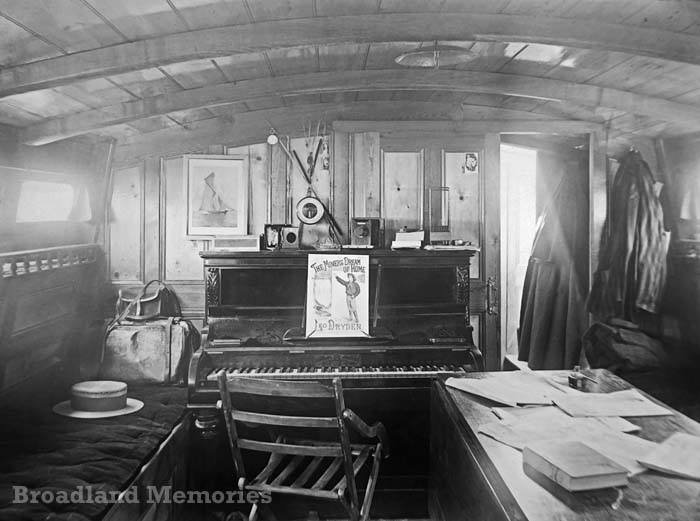
Photographs of the Norfolk and Suffolk Broads from this era are always fascinating, although trying to pinpoint locations can sometimes be rather difficult because the landscape has changed quite dramatically in some areas. The pre-1900 images were digitized from the original glass plate negatives and were a wonderful find. They were taken during a holiday aboard the pleasure wherry ‘Naiade’ which had been hired at Oulton Broad. They took a bit of cleaning up, but the quality of images taken from glass always shines through. They are doubly interesting in that the set also included a couple of interior shots of ‘Naiade‘ which are just so evocative of the era (see below).

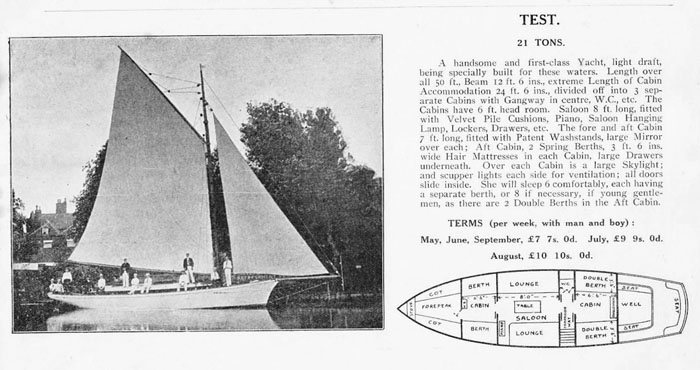
The second set, which were uploaded in November, date from around 1900 and the 34 images from the album document a mixed party holiday aboard ‘Test‘, seemingly cruising in company with the yacht ‘Restless‘. The photographs were printed on paper, and were not in the greatest condition, but they have cleaned up quite nicely with a lot of work. All of the photographs in the album were captioned and I’ve included these original notations along with further information. ‘Test‘ was built and hired by G. Hazell at Thorpe St Andrew and, as can be seen in these photos,  she was a very fine looking sailing cruiser with a clipper style bow. She was later refurbished (1928) and had a four-cylinder 20hp Seabroke engine fitted and continued to be hired by the yard until the outbreak of the Second World War. The brochure entry below is from 1912 and shows ‘Test‘ how she would have been when the group in the Broadland Memories photographs holidayed aboard her.

The most recent addition, uploaded this morning, is another album of photographs which were taken around 1900-1905. These are a little different in that they appear to show the holiday party traveling to the Broads from Folkestone via a paddle steamer. There are also a couple of photographs taken at Southwold, possibly as a stop on the way round the east coast, or maybe as a day trip on one of the ‘Belle’ steamers whilst at Great Yarmouth. Whilst not the Broads, I’ve included them on the website because it is interesting to see how different travel was back then. The rest of the album includes several shots taken at Great Yarmouth Yachting Station, plus a handful of others taken elsewhere around Broadland. The photograph below is one of those taken at Yarmouth and shows some of the holiday party on the quay with what was, presumably, the skipper on the right in the cap.

All of the new additions can be found via the What’s New page on the main Broadland Memories website. Forthcoming highlights which I’ll be working on over the coming months include several further sets of photos from the Edwardian era, more from the Charles Hannaford Collection plus a number of albums and sets of photos and negatives which span the 1930s up to the 1950s. There will also be a few new cine films to come once they’ve been digitized and a rather exciting new addition which arrived in my inbox this week – watch this space!

Posted in Uncategorized | Comments Off on Cruising on the Broads c1900

Zenobia and Olive May

An interesting set of vintage magazine articles relating to Broadland boatyards including Harvey Eastwood, Sandersons, Eastick’s, Landamore’s and Royall’s were added to the Broadland Memories website a couple of weeks ago. Amongst them was a brief history of the Rowan Craft yard at Geldeston which included mention of the wherry yacht Olive May. The article reminded me that I had a couple of photographs and a few notes relating to Olive May lurking within the archives.

Olive May was built in 1910 by G. Bunn of Wroxham for the Spashett family of Oulton Broad. She was apparently quite distinctive with her long, flat counter stern. In his 1953 book “The Norfolk Wherry”, G. Colman Green mentioned that, internally at least, Olive May was said to have been a replica of the pleasure wherry Zenobia which was owned at that time by Green. Zenobia had begun life as the trader Olive Branch, built by Allen’s yard at Coltishall and owned for part of it’s trading life by George Applegate senior of Potter Heigham. When the river trade began to dry up, like many others, The Olive Branch was converted for pleasure use. Alfred Collins was apparently responsible for that conversion which included two saloons, two side cabins, a W.C. and bath plus a full size piano. At a later date, a counter stern was added by Peed of Oulton Broad, along with a foresail and a mizzen, giving rise to her being dubbed a “wherry yawl”. It is said that Zenobia once made the trip by sea down the coat to the Thames. I don’t think I’ve come across any photographs of Zenobia, but the illustration below was from a 1952 oil painting by Colman Green himself.

Turning attention back to Olive May, I was contacted by Andrew Galloway – a descendant of the original owner, Alfred Spashett – who provided a little more background information. Alfred Spashett was listed on the 1881 census as being an accountant and his wife, Mina, was listed as being a shop proprietor. Andrew’s grandfather, John Hart, gave further insight into the family in a letter written in 1965 : “Mr Spashett ran a fishing net business in Lowestoft which I believe still runs under the same name. Mrs Spashett kept a fancy goods shop in London Road, Lowestoft not far from Denmark Road, later a lending library.  Her son Harry Spashett in addition to assisting with this shop was a photographer and produced his own picture postcards.  His son, i.e. grandson of Alfred Spashett, kept a fancy goods shop in Bungay and a branch opened in Beccles. The Spashett’s had the wherry built as a business proposition and it was let with two attendants. They lived at Broad Oak, Oulton Broad and had a dike on the main Oulton Dike just as it leaves the Ham. At the end of their dike was a look out hut which I believe is still there, raised high enough for Alfred Spashett to survey the scape.”

Andrew also sent me a lovely photograph of Olive May from the family collection which appears to date from the late 1910’s. It was notated as showing Mrs Spashett on the stern.

The wherry was named after Alfred and Mina’s daughter, Olive May Spashett, and an edition of The Norfolk Wherry Trust journal from 2000 included a wonderful diary account of a holiday aboard Olive May in September 1919 with the Spashett family, written by an un-named acquaintance. They departed Oulton Broad, making their way across Breydon Water and on to the northern rivers, for what turned out to be a rather cold and wet week. A note was made after the second night that five blankets had been needed on the bed! The skipper and mate were named as Baxter and Ted, and they appear to have been accompanied by a motor launch called ‘Octavia‘, helmed by a teacher called Mr Crone. Octavia provided towing services to the wherry on several occasions whilst, at other times, a rowing dinghy was used for excursions. The family visited South Walsham, where they picked blackberries and gathered bullrushes. From Ludham Bridge, Octavia motored them up to Stalham where the writer and Mrs Spashett “had tea at a pastry cook’s“, did some shopping and posted cards. Onwards to Potter Heigham where they dodged the rain showers whilst walking to the village. The following day was better weather wise and the party rowed up to Hickling for more blackberry picking, followed by tea at the Pleasure Boat Inn. Another nice day saw the author walking to Hickling in the morning and rowing to Womack in the afternoon. Olive May then left for Horning for the final night, aided once again by the Octavia, anchoring close to the Swan Hotel. In the morning, the author secured a return journey to Norwich by motor vehicle for a fare of three shillings. “Very nice ride. Had beautiful seat in right hand corner behind. Stopped at Wroxham. Sad at leaving them all and the beautiful Olive-May.”

Evidence of Olive May being leased out for hire comes from an entry in the 1916 edition of Blake’s Norfolk Broads Yachting List, seen below.

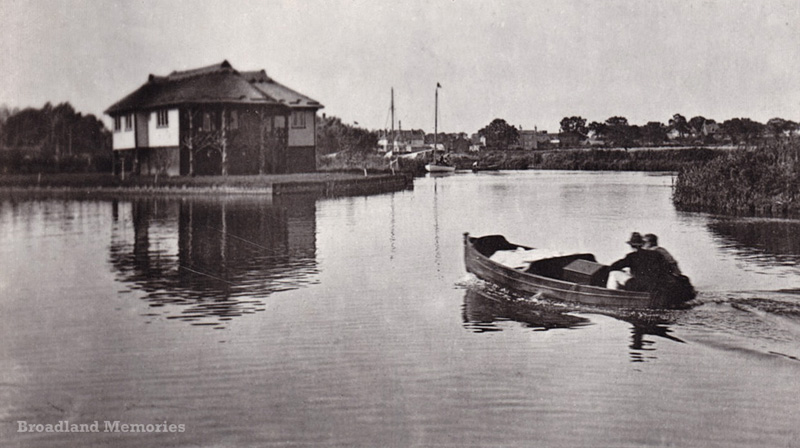
Olive May can be seen in the photograph below too which belongs to a set dating from the 1920s. She is seen here on her swinging mooring just outside the harbour master’s office at Oulton Broad.

There is no evidence of Olive May in the next earliest Blake’s brochure I have from 1929, or subsequent editions, although Andrew mentions that his grandparents visited her at Johnson’s yard in St Olaves in 1952. The next time she pops up within my archives was in the rather sad photograph below which was taken in the 1960s at Geldeston, presumably soon after being recovered by Rowan Craft from the dyke at St Olaves where she had previously sunk. It would appear some restoration work took place, including the repair of her leaky bottom by Richards of Lowestoft.

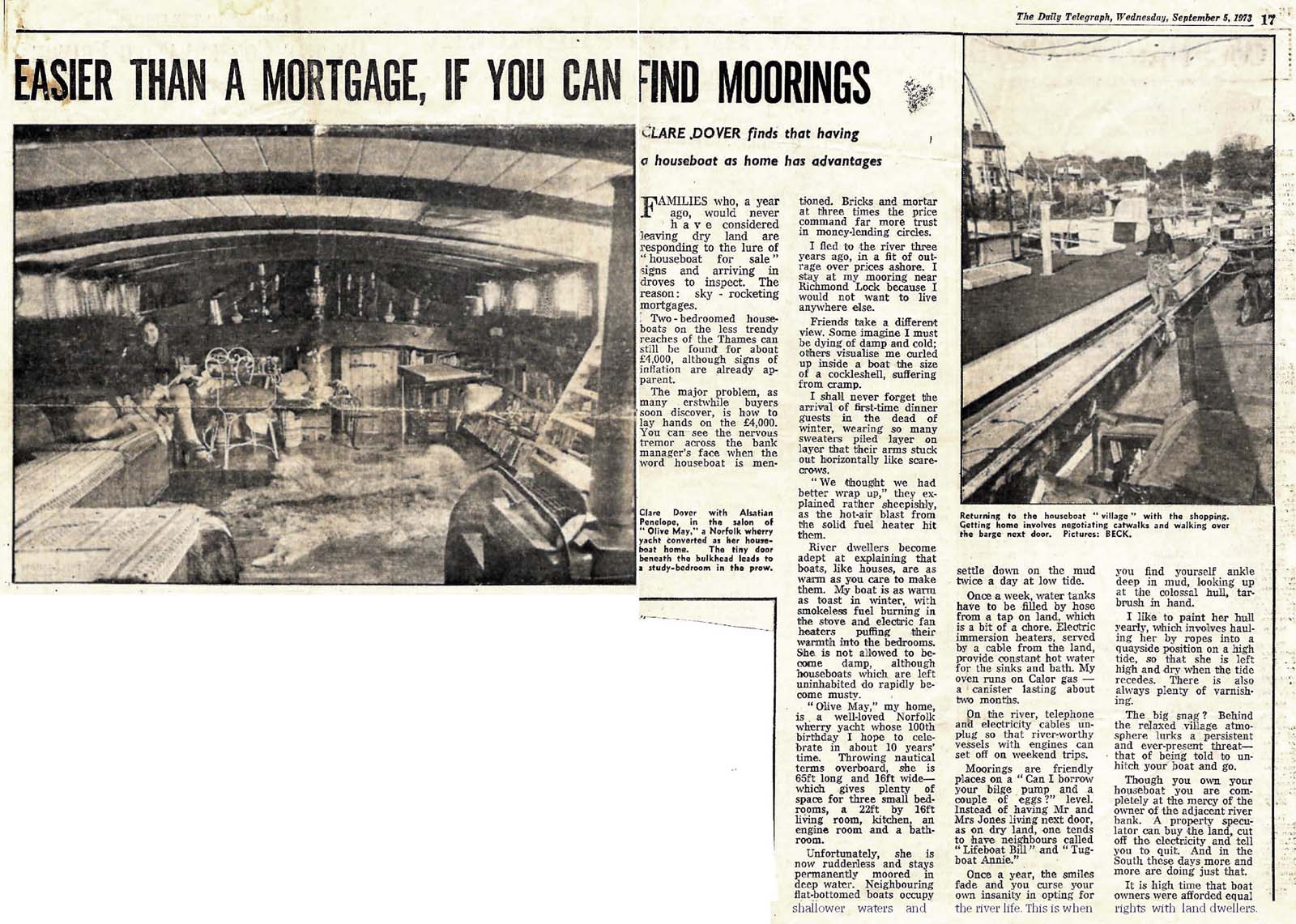
Olive May was then sold and taken to the Thames by sea to be used as a houseboat. Andrew Galloway also sent me an article from the Daily Telegraph, published in September 1973 and written by Clare Dover who had been living aboard Olive May at Richmond Lock for three years. Although she mentions painting the hull once a year, it wasn’t enough to spare the ravages of time as, just 8 years later she was apparently lying in a very derelict state. It’s likely that she would have been broken up not long after this. Zenobia also ended her days as a derelict and was eventually broken up, a fate which befell far too many of these once magnificent vessels. You can find the 1973 article on Olive May on the Broadland Memories website here: Olive May on The Thames 1973

If you have any further photographs or information to add about Olive May or Zenobia then, as always, I’d be delighted to hear from you.

Posted in Uncategorized | Comments Off on Zenobia and Olive May

Norwich and The Norfolk Broads in the 1940s

The first new update for a while, but I hope that I finally have some free time once again and can start to work my way through some of the backlog of new material waiting to go on the Broadland Memories website. The first offering is a lovely little black and white cine film which was shot on 16mm filmstock.

I am not certain of the exact date, but it looks as though it was probably taken just post WW2, so late 1940s. It starts with a little bit a footage taken from a train as it approaches the station at Norwich. There are a few scenes of the city itself before it switches to the Broads. The film includes its original captions and follows a young couple on a small sailing cruiser around the northern rivers. Wroxham, The River Thurne and Horning all appear along with some familiar landmarks such as Dydler’s Mill. At the end of the Horning footage is a scene of the young lady pulling herself across the river by chain on a foot ferry. Was this indeed Horning and, if so, is that the bombed out remains of the Ferry Inn in the background? It’s another interesting addition to the archive and there will be more to come. Whilst I may not have been active online of the previous few months, I have still been gathering new material for the archive. This includes some very interesting collections of photographs which span c1900 to the 1950s, plus a few more cine films which I am hoping to get digitized very soon. Among these are a 16mm colour film from the 1950s or 1960s which appears to have been taken aboard Delight XI from Herbert Woods, and also what I believe may be a very early Blakes promotional film from the 1930s which is on 9.5mm Pathe film. These are all unseen so far, so I am dying to see what I’ve actually got. I look forward to making the films, and all of the new photographs waiting in the wings available to view online.

Posted in Uncategorized | Comments Off on Norwich and The Norfolk Broads in the 1940s

Jollidays – Herbert Woods in the early 1930s

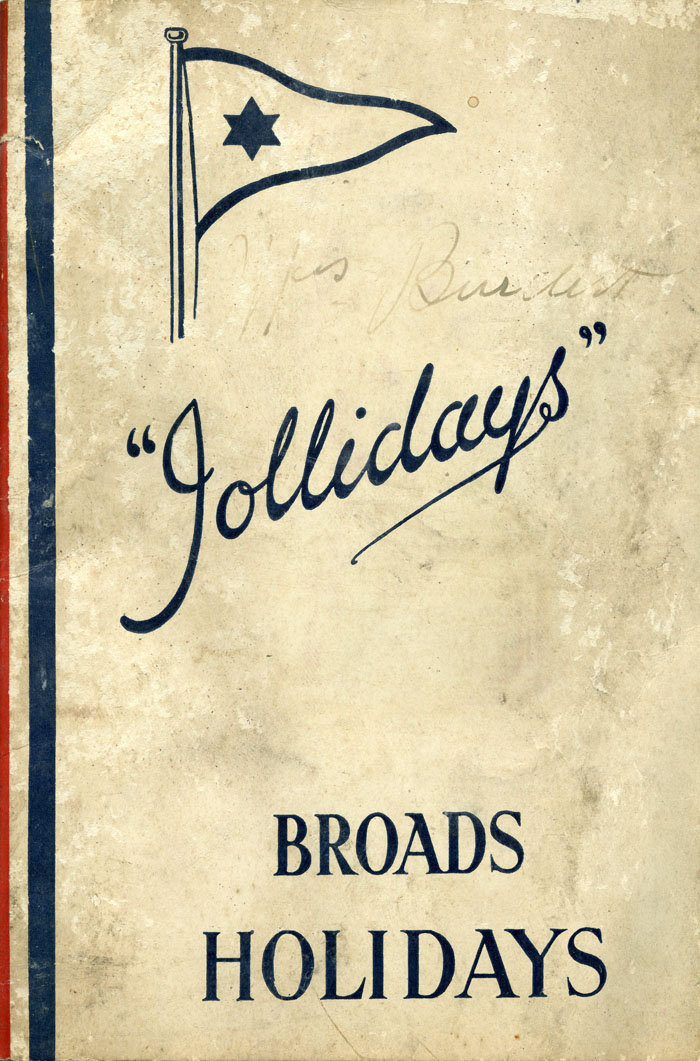
I’m always on the lookout for old books and other Norfolk Broads related items to add to my own collection and a recent birthday present to myself was a rare copy of a 1934 yachting list produced by Herbert Woods. The “Jollidays” booklet not only includes photographs and descriptions of the various classes of motor and sailing cruisers available for hire, but also contains some wonderful photographs taken around the Broads-Haven yard at Potter Heigham.

I’m not sure how many editions of the Jollidays brochure were produced, but copies rarely come up for sale, so I was extremely lucky to come across this one. The 60 page booklet is predominantly a showcase for the Broadland “Light” Cruisers developed by Woods from the late 1920s onwards. As such, it gives far more information about the fleet and their design than Harry Blake’s Yachting Lists of the same era, who also represented Herbert Woods amongst his roster of Broadland boatyards. I have previously covered the incredible innovation shown not only in the design and powering of the Woods craft, but also the way in which they were fitted out and equipped. Herbert Woods can quite comfortably lay claim to being the godfather of the modern day hire fleet – the build materials and technology may have changed, but the modern motor cruiser is not a million miles away from the fleet he built at Potter Heigham during the 1920s and 1930s. As Herbert himself put it: “The main item of a holiday afloat is the boat. It is essential that this should be comfortable, well found, and of ample room for the party living thereon. It must be handled with confidence and ease, so that the greatest benefit of this fresh-air recreation can be obtained without anxiety to the helmsman, or anything but enjoyable content to his friends.”

The above photograph was taken from the Jollidays booklet and shows Duchess of Light at Horsey Staithe. The largest class in the fleet, Duchess and her sister ships, Countess, Empress, Princess and Peeress, were 42 feet in length and slept up to eight people in three cabins. The spacious saloon was entered via the wheelhouse, a galley forward of which led to the front cabin, passing a toilet closet and bathroom opposite in which you would have found a full size bath. At the rear of the boat was another two berth cabin and a second toilet. Woods equipped all of his light cruisers with Morris Marine engines and the Duchess class came with an 18 hp, 6 cylinder “Commodore” motor with self starter, the dynamo supplying power to charge the large batteries needed for the electric lights on board.

The interior shots for the Duchess class (above) show the attention to detail and the quality of the fit-out for the Light Cruisers. The Jollidays booklet gives the following description: “The comfort of the party has been studied in all matters, and the equipment is in every case of extremely good quality. The sleeping berths are all fitted with patent ‘Somnus’ spring mattresses, ‘Osman’ sheets and pillow cases, pure wool rugs etc. The saloon mattresses are all of the box spring type, and all berths are much larger than those usually found aboard private or hire craft.” Note the cushions in the saloon which were made by the company in white fabric emblazoned with the Woods blue star. Just imagine stepping down into the saloon and wandering through your holiday boat for the first time. The smell of freshly varnished woodwork, the highly polished brass fittings glinting as the sunlight streams in through a window, colour co-ordinated fabrics and furnishings adorning every cabin and the gleaming pots and pans hanging in the galley.  The Light Cruisers were the absolute height of modernity and luxury in motor powered craft.

The Broadland Memories DVD “Boating on the Norfolk Broads in the 1930s” follows one family taking two holidays aboard Herbert Woods cruisers in 1932 and 1933, the second of which was aboard Countess of Light. It’s quite nice to think that they may have planned their trips from one of the Jollidays brochures.

As I mentioned in the introduction, Jollidays also contains a number of photographs which show the Broads-Haven yard. Shots of the mooring basin from this era are always nice to see, but of real interest are the behind the scenes images that most holidaymakers were unlikely to see. Alongside the many skilled boat builders, engineers and general maintenance and yard staff, there was an army of female workers who were responsible for ensuring that all the boats were clean, equipped and ready to go out on hire.

The photograph above shows the mattress and bedding store with the lady in the foreground busily hoovering one of the box spring saloon mattresses from the racks behind her. In the background you can see various piles of the Somnus mattresses, woolen blankets, pillows and sheets. How smart they all look in their uniforms!

This was the Equipment Store where the pots and pans, crockery, glassware and cutlery were cleaned and prepared for the cruisers. Everything was taken off the boat after each hire, carefully washed and then returned for the next holiday party. “Cutlery is, of course, of the stainless variety, the blue and white china is attractive in style and of far better quality than the hirer usually expects to find. Tablecloths, etc., being also of blue and white, with curtains harmonizing, the general scheme of decoration throughout the fleet is very attractive, and particularly appeals to the ladies of the party, who are generally more discerning in these matters.”

“Much of the enjoyment of this type of holiday depends on whether the equipment for use in cooking, eating and sleeping is good, bad, or merely indifferent. Those who know Mrs. Herbert Woods, who is in sole control of these items, are prepared to leave this matter in her capable hands, realising that even the best is scarcely good enough when equipping the ‘Light’ Cruisers.”

This was captioned as being the ‘Building Shop’ where the Light Cruisers were constructed and maintained. It gives a real sense of just how large scale the operation was at the Broads-Haven yard.

The view looking across the Broads-Haven mooring basin at Potter Heigham towards the footbridge across the entrance, which leads out onto the River Thurne.

Another view of the mooring baain from Jollidays, looking back towards the sheds. Note that the now familiar water tower had yet to be built when this photograph was taken. Holidaymakers who arrived by motor car were able to drive right up to their holiday cruiser and the car was then parked in one of the garages for the duration. “The staff at ‘Broads-Haven’ will always be found willing and anxious to do everything in their power to add to the enjoyment of our clients, and the heavy stock of spares and equipment always on hand ensures a degree of service highly appreciated. A unique feature is the hot soft-water baths always available, and the day and night attention to be inaugurated for the coming season will add still further to the usefulness of the establishment.”

New for 1934 was the opening of the Broads-Haven Stores over the Whitsun holiday Previously, provisions were ordered in from outside sources which, according to Jollidays, had often caused delays in the holiday party getting underway. Herbert Woods wanted to offer a complete, in house service to his clients: “It will be our endeavour to make this store up to date, with all goods at fair and reasonable prices. Fresh fruit and vegetables will be grown on our own land close to these premises, and supplied as required.”

Although at the forefront of the development and building of modern motor cruisers, would be Broads yachtsmen were not forgotten. “As a member of the third generation of Broadland builders of sailing boats, and as one who annually wins more prizes in sailing races than any other builder on the Broads, I am in a position to offer a number of yachts which, of their type, are particularly well suited for sailing on these comparatively shallow rivers and Broads.” The two berth, single cabin Winsome and Welcome were recommended for novices, whilst those requiring something a little larger and more powerful would be better suited to the Smuggler with: “the fine lines and balance of a racing cruiser, and to those who put sailing qualities before cabin accommodation this crack of the Broads letting fleet will strongly appeal.” Also within the fleet were the double-cabin yachts Bootlegger and Filibuster and the 34ft Wayfarer class.

Jollidays is a remarkable glimpse into the pioneering years of motor cruiser development and the modern Broads boating holiday. There are still a number of the original ‘Light’ Cruisers and yachts out there which is testament to the build quality, the ongoing maintenance whilst still in hire, and the dedication and devotion of the subsequent owners of these beautiful craft. The Herbert Woods boatyard recently brought Spark of Light back into their fleet and, after careful restoration, she is now available for day charter from them. Water Rail, the former Delight VII, can be hired for three or seven nights via the Little Ships website. The yacht Bootlegger is also still on hire, available from the Eastwwod Whelpton boatyard at Upton. The magnificent Countess of Light has also undergone a lengthy and thorough restoration and has recently been re-launched. You can follow the latest updates from her owners via the Countess of Light Facebook page or Twitter account.
Posted in Uncategorized | Comments Off on Jollidays – Herbert Woods in the early 1930s

Kia Manzi and the Daisy Broad Villas – the story so far

Back in 2012 I posted an old photograph showing the three identical villas which once stood on Daisy Broad at Hoveton. The postcard was believed to date from the 1930s, although the buildings themselves looked rather more modern than that date suggested. So began the story of Kia Manzi and the Dasiy Broad villas.

A couple of months later I was contacted by Chris Raynor whose grandfather had owned one of those villas, Kia Manzi in the late 1960s and early 1970s. Chris had many fond memories of holidays spent there and sent me a wonderful collection of photographs which you can find here on the main Broadland Memories website. An updated blog post duly appeared to accompany Chris’s contribution to the story but we were no nearer to establishing when the villas were actually built.
The original c1930s postcard of Daisy Broad can be seen above. The villas appeared on the 1938 ordnance survey map of the area but they had yet to be built when the photograph below was taken. I had originally dated the postcard it came from to the 1920s or 1930s, but there were no real clues to provide a definitive date for it. It shows the entrance to Daisy Broad with the building which later became the Beehive Stores on the left. Postcard manufacturers were well known for reusing photographs which were taken years, and sometimes decades earlier, which meant that this could possibly date from the early years of the 20th century. A more solid clue came when I spotted the villas in a film held by the East Anglian Film Archive which appeared on the BFI’s Britain on Film Project. The Broads of Norfolk and Suffolk is dated to 1920 which meant that the villas were probably built just after the First World War.  I received a little more information regarding the un-named architect who designed and built the villas. Apparently, he was mortified when shortly after the villas were built, they began to sink into the marshy ground and is alleged to have taken his own life as a partial consequence. It’s an extremely tragic tale if true.

A few months ago I was sent another photograph which featured Daisy Broad and the three villas by Linda Gowans (seen below). She found it among a collection of others which spanned the years between 1926 to 1938. The photographer is unknown, and this was the only image taken in the East of England, the remaining photos being of the Isle of Man, Cornwall and Merseyside.

Kia Manzi can be seen on the left of the photo and the chap in the foreground appears to be standing in the aft well of a wherry. I would guess that a date of the early 1930s looks about right. My thanks to Linda for allowing me to share the photograph on here.

In the early stages of looking into the history of these distinctive buildings, I came across evidence of the subsidence problem via brochure entries from the 1950s and 1960s for the other two villas, then named Southernholme and Broadwaters. The 1958 entry for Southernholme in the Hoseason’s brochure of that year showed that it was noticeably lower than it had been in the 1930s postcard. Linda’s photograph really illustrates that difference quite clearly. Just two years later, the ground floor had obviously become unusable and the upper floor was now a single level holiday flat.

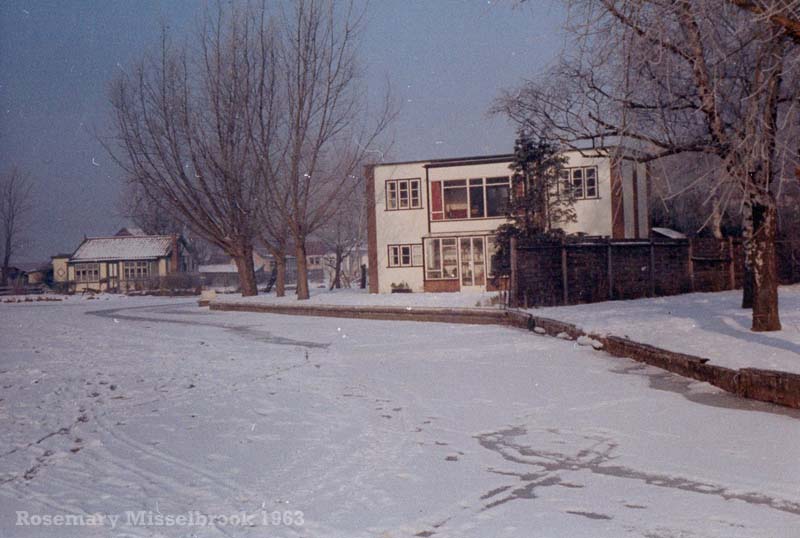
By the early 1970s, what remained of the former ground floor storey of both Southernholme and Broad waters had been removed and the upper floor now stood on stilts as the 1972 brochure entry on the right shows. Kia Manzi fared better than the other two villas and still retained both floors when Chris Raynor’s grandfather owned it, although Chris does remember having to walk downhill to patio doors from the river and that it always seemed somewhat damp inside. Chris also told me that the name was given to the villa by a previous owner, an ex RAF officer. The photograph above is from the Raynor family collection and dates from the late 1960s. The power of the internet is sometimes a wonderful thing as, in January last year, I was contacted by the daughter of that former owner who confirmed that her father, who was Rhodesian, had christened it Kia Manzi which was the Matabele word for “house on the water”. Rosemary Misselbrook recalled the family remodelled the layout to move the sitting room upstairs and bought a little cruiser from the London Boat Show to use as a runabout. She couldn’t remember what the house had been called prior to her father buying it, but thinks that all three were owned by Dawncraft at that time. Rosemary also sent me another couple of photographs of Kia Manzi whilst under their ownership to add to the story including the image below which shows Kia Manzi during the notoriously harsh winter of 1963. That is the river in the foreground!

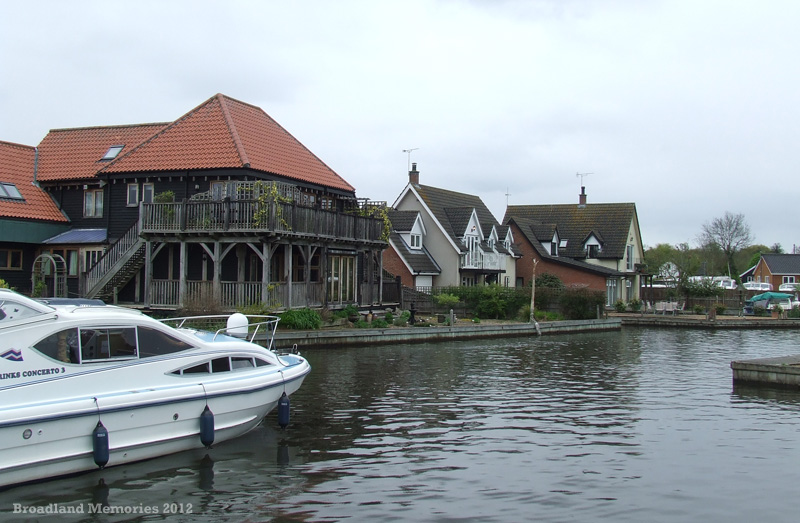
Southernholme and Broadwaters were both demolished in the mid 1990s and new properties were built in their place. Kia Manzi survived for a few more years, but it too was eventually demolished and replaced. The photograph below, taken in May 2012, shows all three of the new houses with the new Kia Manzi on the left.

As always, if anyone can provide more information about the history of Kia Manzi and the Dasiy Broad villas, then please do get in contact via the main Broadland Memories website.

Posted in Uncategorized | Comments Off on Kia Manzi and the Daisy Broad Villas – the story so far